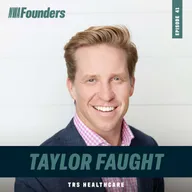
Taylor Faught, TRS Healthcare
Cameron Clark and Nick Beyer talk with Taylor Faught of TRS Healthcare in Rogers, Arkansas.
What does it actually look like to scale a business through uncertainty without losing your people, your values, or your long-term vision? In this episode, Taylor Faught, CEO of TRS Healthcare, shares the story behind building and scaling a healthcare staffing company from a regional family business into a national operation. From navigating explosive growth during COVID to leading through a more challenging, post-pandemic market, Taylor offers a rare look into what it takes to grow sustainably while staying grounded in relationships and purpose.
Chapters
Key takeaways
- Focus beats expansion (especially when things are working): One of the hardest decisions Taylor made was saying no, especially during COVID when opportunities were everywhere. Instead of chasing short-term revenue, he focused on long-term partners and sustainable growth. If you’re building, the question isn’t “Can we do this?” but “Should we?”
- Culture doesn’t happen by accident, especially in remote teams: From daily company-wide calls to camera-on meetings and annual in-person gatherings, TRS built culture intentionally. As Taylor put it, “You can still have a culture in a remote environment”, but only if you’re willing to lead it on purpose.
- Your business is only as strong as the people it serves and supports: Whether it’s nurses, clients, or internal team members, Taylor’s approach is simple: take care of people first. For younger founders, that’s your foundation. For seasoned founders, that’s your story, one worth telling clearly and often.
Show notes
Summary
At the heart of the conversation is Taylor’s leadership philosophy: growth is only meaningful if it’s built on strong culture and clear values. Whether it’s transitioning to a fully remote workforce, maintaining team connection through intentional communication, or celebrating wins even in difficult seasons, Taylor emphasizes that people (not just performance) drive long-term success.
The episode also unpacks the evolution of the healthcare staffing industry, from pre-COVID stability to pandemic-driven demand and today’s more competitive, transparent market. Taylor shares how TRS adapted by focusing on efficiency, automation, and speed while never losing sight of their core mission: improving patient care by placing the right people in the right roles.
Finally, Taylor reflects on the deeper “why” behind the business. Through personal stories of how TRS nurses have impacted real lives (including his own) he reframes success beyond revenue. It’s about building something bigger than yourself, creating opportunities for others, and making a meaningful difference in moments that truly matter.
Follow us on LinkedIn NWA Founders
Follow us on Instagram @NWAFounders
Follow us on YouTube NWA Founders
For guest suggestions or inquiries nwafounders@gmail.com
NWA Founders is a voice for Founders, Owners, and Builders driving growth in Northwest Arkansas, and is hosted by Cameron Clark and Nick Beyer.Links and resources
Transcript
Read the full transcript (12,677 words)
Looking for something across every episode? Search all the transcripts.
Skip past the transcriptWhat is TRS Healthcare0:00
Talk about the industry as a whole right now. Obviously it exploded during COVID. We're much further past that now. Is it
stagnant? Is it growing
vendor? You know, A, we're not gonna work with them, but we're gonna go with vendor B and C. Vendor A might be the biggest, have the most opportunity out there right now.
We don't foresee them being a really good partner two years from now.
Is the demographic of that person the same?
The demographic was people that were probably later forties, early fifties. Fast forward where we are now. It is totally changing.
What is your hope for the healthcare industry today?
So the biggest challenge, this is a really, this is the biggest challenge we've had, is
Taylor fought TRS healthcare you took over as CEO in 2012. Family business. Deanna Wright, your mother-in-law started the company
25 years ago.
Yeah,
around then.
Late nineties.
Late nineties. And yeah. We're sitting here to see with you today all this explosive growth you've had over the last, call it eight, eight years or so.
And, uh. You know, I think your unique situation compared to most of the other guests we've had on before, fully remote company pros, cons, what do you advise someone when you're scaling a remote business?
Yeah, very, very good question. And I, I can kind of just speak to, you know, what we went through and what we were looking to do at the time.
And so, um, we, I was looking to expand the business and grow the business. We had just boughten the business, uh, boughten our family out, Diana, uh, and David Wright. And so I was really looking to, to scale and go in a different direction. And so at that time we were really limited to just northwest Arkansas, right?
And so I was really looking for, um, healthcare staffing experience. Uh, and that doesn't really just grow on trees around in this area. Uh, and so if I wanted
vendor world or Walmart world, it's easy. We can find that talent. But really specifically in healthcare staffing, that's where. Uh, I got out and really looked at the industry and saw what other companies and competitors were doing, and it was like, Hey, we just need a little bit more talent, just specifically with this niche talent.
So, uh, really had to start looking elsewhere, honestly. And so, um, I found some leadership, uh, some in, uh, New Jersey and San Diego Little Rock. And really at that point we were doing a hybrid approach, uh, model. So we had people outside of northwest Arkansas, but we also had our core team here. So, uh, that kind of really started this little hybrid approach.
Uh, and then we started just kind of building the team around that, doing both. And it had gave us access, uh, to talent that we needed. Sure. As we were trying to scale and grow. And then, you know, of course COVID happens. Uh, we hang in there for a little bit with the team, but then make the decision, Hey, everybody's gotta go home.
Uh, I was the last person, I did not wanna do remote. I was the last person in the building. Uh, so it was me and one other
person. Uh, and we were just, we were waiting for everybody to get laptops at that point, you know? So we were in the, you know, even before COVID, most people were working on desktops. Um, you know, it was funny, you know, weather storms would come through Fayetteville.
We had a lot of team members in Fayetteville. You know, it's hilly. It was like we were going around and picking people up Yeah, right. To bring them into work. Yeah. Because we didn't even have laptops, uh, fully e everybody at that time. So even kind of through this transitionary process before COVID has happened, we were already starting to migrate everybody over to laptops.
Uh, so some of us didn't, we weren't fully there, even at COVID. So. We still had some people in the office, but eventually, yeah, everybody goes home. I really started researching, uh, at that point it was like, what do we do? Really watching what was happening. Uh, COVID was an interesting time for us at the beginning.
It was, it was very slow. We could get into that, but then it kind of just took off and was a little crazy for a while. But, uh, we really looked at, we surveyed our people. I talked to a lot of other businesses that, that's all they did was being we're remote and
really just tried to figure out what's the best option for us and what could we do.
Mm-hmm. Fortunately for us, we could operate our business in a remote setting. A lot of times, you know, in healthcare staffing, we don't even see our nurses or the people that we talk to, it's all over the phone. Uh, so they're not coming into our office, uh, or things like that. So our business model could operate without having a physical location.
Sure. It was just the question of was that best for us or not? And so after talking to them, multiple different companies, and then we surveyed our employees. Multiple times, uh, the benefits and, you know, the negatives of being remote and really kind of just after that research and after talking to our team and seeing our team being very productive.
Mm-hmm.
Uh, after, after slowly getting into a work, uh, from home environment, um, they were really productive in getting their jobs done. So, um, at that point it was really, okay, we think this is the best thing for us and we can continue to get talent wherever
we want, whether it's Northwest Arkansas, which we still do, or, you know, across the country.
We're gonna go find people that fit, uh, with our values in our systems and what we want to try to do, uh, within the company. So it kind of. From that, from being productive at working, staying on top of it, um, we decided to just flip the switch and go fully remote. Now we had to completely really change how we did onboarding and bringing people in and
yeah,
how we actually operated as a company and set some standards, uh, because yeah, you can't, uh, you know, it's a different world.
So how do you do orientation for people? How do you feel connected and how do you build a culture? And it's been amazing. How do you, you can still, you can still have a culture in a remote. That's been the probably the most fascinating thing. You can still have a culture.
Oh, how, um,
so I think, I mean, you, it's, it's small things.
I mean, yeah, it's the big and the small. I mean, you definitely have to have a vision. You definitely have to have your values. You have to be communicate, communicating, and living by those things. But, uh, in a
remote setting, one of the biggest things was we do video calls. So we don't really do phone calls.
We, I mean, people can get into that, but really, you, we want to make sure. Hey, you can see people and you're talking to people. So yeah. If I'm gonna call Cameron, I'm actually gonna do a Zoom or a teams call. Yeah. And we're gonna talk face to face. Right. So, uh, a lot of people would come in and they'd have their camera off when we're doing meetings, and we're like, no, no, no, no, no.
This is, you have to be camera on. Yeah. Always. So that is one of the biggest things that we really had to battle against people were, well, I, you know, I'm not dressed and I, I don't have my makeup on, or I don't, I don't have, you know, I, I don't look presentable. It's like, that's not my problem. I really don't care.
Yeah. You know, it's like, I wanna see you, you wanna see us. Um, so, uh, because we have to make sure we're still real, you know, we're still, uh, a organization and we're still together. Some of it too, uh, we have a, we have a company call every single day where everybody gets on at 11 o'clock. We got kind of go over our main
State of the Healthcare industry today7:00
things that we're trying to do from the sales, uh, piece.
All the support departments are there. They see what's going on and where we're going.
Mm.
And what we're doing. Uh, with that, I do, uh, a monthly call with the whole team where we're at. What we're doing where, what goals, you know, what rocks we're focused on and how we're doing and performance wise, uh, financially as well.
So that's a big piece of that. Uh, and then two, we get together at least once a year, so we'll bring everybody in. I still think that's very important. Different times. We did it a couple of times a year, now we're down to one where we just bring in the whole company, uh, just make sure we can see each other.
We are real people and make connection as well. So those, those are some of the bigger things. But yeah, smaller things day to day, it's making sure we're doing video calls, talking to each other, um, and, uh, you know, doing kind of, we do a silly thing too. We do a hump day Wednesday, hump day, and, you know, we raise our hands and we do like a pig suey call almost.
So it's, you know, it's weird. You're in Starbucks and you're gonna be, you know, raising
your hand doing, uh, jazz fingers. Yeah. But it's something silly that kind of just brings us together, right? Yeah. And, uh, uh, those are, it's things like that that make a difference.
That's, that's cool. Um, so talk about the industry as a whole right now.
Mm-hmm. Obviously it exploded during COVID. We're, we're much further past that now. But is, is it, is it stagnant? Is it growing? What's the, I mean, is are, is it more of a lifestyle play for these nurses that wanna travel? Um, year round, I
guess. Yeah. Yeah. So that's been interesting. 'cause Yes, pre COVID, um, it, it was, uh, still growing.
There's a lot of opportunity and then COVID. Uh, it was just kind of a crazy time and yes. Exploded. So we're kind of on the backside of that from the industry perspective, it's kind of come down from COVID and really we're at this point of just really flattening out. Mm-hmm. Um, and so that's, uh, for us, we see that as a good thing.
'cause there's gonna be some growth. We, we foresee going into the future. You know, it wasn't skyrocketing like, uh, through the co
COVID times, but yeah, there's still potential in growth. Just the demand is still there. Uh, shortage of supply of nurses and other healthcare professionals. So, as an industry, yeah, it's still positive.
There's still that, uh, demand and need for people. Uh, so we, we see that being positive as far as the, the nurse side of things as far as the travel, uh, happening, you know, um. There's been margin compression probably so from our, from a, a company, which that puts compression on the nurse too. So inflation as well has been a challenge.
Just 'cause housing, we have to provide housing or they, the nurse has to find housing. Uh, so that makes things a little bit tighter and more complicated. So it probably has, is not as near as lucrative for the traveler or healthcare professional during COVID. Mm-hmm. Uh, but those things are kind of adjusting and settling into as we get through, you know, uh, these times.
But, so it's a little bit tighter, but there's still a lot of opportunity, uh, for nurses. So it's taking an adjustment for healthcare professionals and nurses coming outta
COVID and making this, you know. Yeah. A pretty huge increase in pay, uh, on a weekly basis to, to where they are now. So that is shaking out and, and working out.
Uh, so it's not as lucrative for, you know, us or, or the nurse at this point, uh, as it was in COVID, but that, you know, it's looking more positive as we get, uh, further and further away from COVID.
Hmm. Talk about. So I want to, what's the value prop for one of these nurses? Mm-hmm. And then I wanna just, you, you share the, the, the offerings that you have between international and national here.
Yeah.
Yeah.
So for, we call 'em the, the people we work with, any healthcare professional, we call 'em travelers 'cause they're out traveling, uh, across the, the country. So. You know, there's a lot of different benefits to it. Just depends on what that person's looking for. But yes, generally, generally speaking, uh, for them the benefit would be, hey, they can make more money.
Uh, they can see, uh, different parts of the country if they're looking for adventure or
travel. Um, they can also get the other big things, different experiences within healthcare systems. 'cause different healthcare systems operate differently and do different, uh, do things differently so they get a broader understanding.
They can also upskill, uh, 'cause you, you could go to to Mayo Clinic or you could, could go to MD Anderson. And so those are things that are, you know, skill sets, uh, that they're improving. Uh, and also building a resume too for them in the future, depending on whatever they wanna do. So those are the bigger, uh, things and benefits, uh, of why somebody would, would want to travel.
Yeah.
Uh, and, and why they do so. Yeah.
Is the demographic of that person the same? Do y'all see trends in that? Have those trends changed?
That's a fascinating, uh, fascinating question. 'cause when I, when I started this 20 some years ago, uh, it was really, the demographic was, uh, people that were probably later forties, early fifties, their kids had graduated and they were becoming empty nesters or were, uh,
about to happen.
And so, and at that time too, we were explaining what travel nursing was or you know, or travelers what, what that even was and how it even worked, right? Yeah. And so that was, uh, a big education at that time too. So, fast forward where we are to now, it is completely, it is totally changed. I think our probably average would be probably in the thirties still, but you still are getting, um, younger.
People entering and wanting to travel. So, and now it's not an education thing. I mean, now you have, I'll talk to people, they say, Hey, I wanna go to nursing school and then I wanna get my two years experience, and then I wanna go travel. You know, I mean, there, that's what it looks like now and it kind of fits, uh, you know, the, the, the millennial Gen Z uh, generational, uh, situation too, because they're not looking at settling down, buying a home.
They're kind of delaying those things till later in life. Uh, so that's now this type of environment, or the benefits of traveling
fits that generational dynamic more so. Uh, so yeah, we see a lot more, the demographic is a lot younger than what we saw 20 years ago. No doubt.
That's cool. And then walk us through an example of what a traveler could make versus a nurse down the street and how, how, what on average, like what does that look like?
Yeah, so it would, it just, that all depends on everything, but yeah, you're looking at, uh, if you go travel, you're, you're probably looking at 2000 a week right now. Uh, as opposed to being at home. It could be a thousand or 1200. It just depends on what the breakdown, what the breakdown. And then traveling could be even higher than that.
It just depends on what the specialty and what the demand is and what the need is at, uh, for the facil at the facility level.
Yeah, that's surprising. Yeah.
Yeah.
Well, why don't you walk us through the start of the business, just kind of some of the history part of it. Maybe what the business was doing then.
Yeah.
And then
we'll get into what it's doing now and how that's changed.
Yeah. So no problem. So, uh, fascinating story. Diana Wright, my mother-in-law, uh, started it all. She was, uh, you know, her story just really condensed was she was a single mom, put herself through nursing school, um, became a nurse. Uh, eventually went to MBA school, was more of an entrepreneur.
She found out, did some hospitals and clinics, uh, but eventually, uh, ended up moving to Northwest Arkansas, uh, probably mid nineties or so, and was really looking to, Hey, what do we do now? And was. Uh, so she decided to do a, a staffing company. And at that time what motivated her was in Arkansas At that time, you know, registered nurses were making like 12 bucks an hour, I think.
So they weren't getting paid very well. So, uh, right. Fortunately, right at that time we had, uh, the turnpike connecting Northwest Arkansas over to Tulsa. So really her strategy was, hey, uh, she went and worked shifts over in Tulsa, learned during, uh, during the night, figured out their
staffing needs and their schedules, and then she would come back to Arkansas.
And start recruiting nurses and placing nurses. Uh, and at that time it was a, it was a per diem agency, which we would call, its daily staffing. Uh, you know, nothing was guaranteed so you could staff a hundred nurses, uh, for the next day, but only 50 work or pick up their shift. So really transactional, uh, and really nothing guaranteed there.
But she built her business up to be the dom most dominant, you know, regional per diem agency, uh, at that time in, in the cell to, you know, the Arkansas nurses was, uh. Hey, you go work one shift for me and you'll make basically what you made in a week. And, uh, the thought was, well, we can't go over to Tulsa.
That's like two hours over there. She's like, no, it's actually, you know, hour and 15, hour and a half. Like, you can do this, you can work a shift, come home. So, uh, you know, the growing, you know, infrastructure of the area and the forward thinking people in northwest Arkansas, which has been great. I mean, she benefited from that.
Yeah, it was great. It was a good model. So, uh, shortly that was perms tough, uh,
cutthroat, you know, nothing's guaranteed. So she had the vision of going to, uh, more of the travel type, uh, uh, business and industry. So she made the jump and the leap and really haven't looked back from there. So she did an incredible job building the business and, uh, going through that.
And so she, in 2012, uh, um, that's where she, uh, had a, a cancer diagnosis and really had to step out and that's where I kinda came in and, and ran the company, but. Took over from C-E-O-C-E-O at that point. And then, uh, about four or five years later, that's when we bought out the company and, and started, uh, really trying to grow it too.
But for me, uh, how I got into business, I always said I would never work for the family business. I think that's when I learned never to say, never, uh, that my was a God thing. I think it was like, okay, we're gonna find out if that's true, but, uh. Uh, went to school at Oklahoma State and met my wife there. We went to Houston for a couple years and, um, hurricane Katrina came through, hit New Orleans.
Hurricane
Rita came in and was, uh, coming straight for Houston. Uh, and you know, I grew up in Oklahoma, so I'm more used to tornadoes. You know, you can see 'em coming. They're really quick and they're gone. Uh, hurricanes, that was a different deal. So we went through that whole process and kind of evacuation process, and it's like, I don't wanna do that again.
So that's when we started looking at northwest Arkansas, came back. Uh, and so I, I joined the family business until we, I could find something else and actually really saw the opportunity. Really wasn't even aware of what healthcare staffing is and the demand and the need, uh, for healthcare professionals.
And so really learned the business and enjoyed it and saw the opportunity. So I ended up staying with it. And what
year, what year did you jump
in? Yeah, so we, we came back, I jumped in late, uh, 2005. So December of 2005 is when I jumped in.
What did the business look like then?
Yeah, so it was smaller. So we, we probably had, I don't know, I would say around a hundred travelers with us.
Probably 30, 40 people in-house.
Um, so that's where we were at that time. Uh, when I took over, it was really mainly, or sorry, we were mainly a travel. Company.
Yeah.
Uh, and so at that time when I took over, so we were probably running 20 million when we took over revenue wise. Uh, within a couple years after taking over CEO, we were up to about 40, so we just doubled it in those few years.
Um, and then that's where we, we slowly started expanding into, uh, from the travel. We saw the need to, uh, help hospitals consolidate their vendor panels and streamlined cost for them. So that's when we developed our managed service provider, or what the best way to describe it is a broker. Mm-hmm. So we'll go into a hospital and say, Hey, we'll do all your staffing for you.
Yeah. So you don't have to deal with, you know, 50 other agencies. Mm-hmm. So, we'll, we have our own technology that helps streamline that, where they can submit profiles and nurses, they can accept people. It really streamlines the invoicing. So it's really one invoice instead of 50. It's one contract instead of 50.
And
we can help them, we can help manage and find the best providers for those hospitals as well. Uh, so it streamlines a lot. Is
that just nurses or any doctors in that as well?
So we don't, yeah, so in our world it's called locums is doctors or physicians or locum. So yeah, we really, we really focus on, uh, the nurse nursing side, pretty much any specialty.
Within the nursing, we also do what we call allied. Uh, as well. And that's more of what you would think is like an imaging tech or a radiology tech. Mm-hmm. A x-ray tech ct.
Yep.
Uh, tech, surgical tech. So we'll do a lot of that as well. Uh, and then we'll bring in different partners. If the hospitals want locums, uh, we'll bring in other partners as well and team up with them.
And so yeah. Why, why is that, why not do it seems like to me they're, those are all really similar, but I assume there's like different, the way the industry works, um, ha having lo locum or doc doc locus
mm-hmm.
Doctors in there is just a different
business. It's a little bit different, uh, business model and structure,
how you operate from, and they're just different types of people too.
Mm-hmm. From nurses to physicians, totally different groups. Yeah. Totally different setups. And yeah, the way it works, uh, the system works a little bit is just different as well. So I would, I would say generally speaking, uh, the travel setup and model and the nursing side is more longer term. Uh, travel, um, agreements more of the physician and locum side.
It would be more like that per diem type model, uh, where it's kind of daylight or, um, uh, the, the physician's moonlighting or, you know, they're picking up a few shifts here or there. Mm-hmm. Uh, it's just a little bit different to set up an structure and how it, how it works. Uh, so that's kind of why we separate that out.
Um, it would be a big undertaking, uh, for us to kind of look at that model. We've looked at it, we've thought about it, but it's, you gotta really figure out where you're gonna focus and be good at it. It would be, we, we've just felt like it would be more of a distraction and we have more opportunity to grow the, our side of the business.
Have you
stepped out in a distraction before? Business.
Um, you know, I think, yes. So we've, we've, we've, when we were doing nursing, we were like, Hey, should we do allied in therapy? You know, there therapy's another piece too. 'cause there's physical therapy, occupational therapy, speech therapy. Mm-hmm. Which is a little bit different too.
So we at one time said, yeah, let's go do allied in therapy. And just kind of grouped it all together. Uh, and that's kind of why we haven't really looked at doing physician or, or locums. 'cause we know that was a distraction for a while. Uh, trying to figure it out. We try to do it the exact same as, as nursing.
It's a little bit different too. Yeah. Still same model, but you're dealing with different people, uh, different systems on who to contact at the facility level, how to get into those different, uh, units. Mm-hmm. So it was a little bit different. So that's one thing, man. We chased that for a while and weren't successful, so we just put it on pause, came back to really, let's focus on the nursing side.
Yeah. Really get good at, at that. And then we did go. Okay. How do we do this better? And getting the right people in that knew a little bit more and how to, uh, grow that side of the business
was really beneficial. Mm. So still s same and operational, but how do we go attack it and how do we attack the facility level, but also, uh, and the type of people we go after too.
Uh, and disciplines on that. Modalities on the, on the allied side. Uh, we felt like we had a better plan to attack it, so we've done a lot better there. Therapy is another one we haven't really gone after that's a little bit different type of a person, uh, from the therapy. I mean, they go a lot more education, a lot more schooling, so they have a little different motivation than maybe so on the nursing and the allied side.
So that's another one we're like, uh, we look at it, but um, and that might be something we jump into. That's probably the next thing. We've dabbled in it a little bit bit, but, uh, that's a thing. We haven't done it 'cause I don't want to get distracted, uh, too much. So, uh, we really think the opportunities within the allied and the, the nursing that we can capitalize on, uh, more so than the, the, the therapy.
And like, what would you say to somebody who's trying to grow their business and maybe they're
experiencing a lot of growth and someone's like, Hey, let's do this, or Hey, let's do this. You, you've probably had a lot of those experiences so. I think the root of what we're trying to figure out is like, well, why, why not expand?
Or why, why not expand now? Or why wait, you know, two years from now?
Right. That's a, a really good question. And, you know, um, I think you just, I know a lot of people say this, well, you gotta find your niche, right? And I think that is, that is important. Uh, it's just be building, Hey, when you're looking at doing something different, how do you build a plan, uh, and get, you need a good business plan to be jumping into that separate niche, you know?
And so I can, I can tell you where we've said no, you know, even, uh, through COVID was an interesting thing is there was a lot of business out there. It was growing, uh, and there was a lot of people needed help, a lot of facilities needed help and different partners and brokers, you know, needed help as well.
So we, we went through that whole process and we just said, we're not gonna try to. Help everybody here. What
Why not scale more now?24:00
we're going to realize is, what I saw was, hey, this isn't gonna be this fast growing forever, right? This is gonna correct and come back down. And there's gonna be people, uh, that are not gonna, they're not gonna pay attention to us and really don't care about TRS and us as a company.
So my deal was, guys, we gotta focus on people that are gonna be partners in the, in the long run and are gonna be here afterwards and really want to partner with us. Mm-hmm. And so in the future, right? Yeah. And so that's where we just said, Hey, there's certain, you know, um, vendor, you know, A, we're not gonna work with them, but we're gonna go with vendor B and C.
Uh, even though vendor A might be the biggest and might be have the most opportunity out there right now, we don't foresee them being a really good partner. Uh, you know, two years from now. Sure. And so that was one of the areas was we're not gonna go chase the highest bill rate. We're not gonna go chase the most amount of revenue that we could actually get, but we're gonna actually focus on people that we'll build partnerships with.
And we can build partnerships through a challenging time right now, and that we can prove ourselves and it's gonna help us out on the
back end. And that's really been. Really beneficial, just choosing the right partners, uh, that, uh, they need you to succeed and they want you to succeed, uh, your business to s succeed as well.
So, uh, that's one area where we say, Hey, no, and the different way is like, Hey, no, we're not gonna go after this. We're not gonna go after this type of client. We're gonna go after these types of clients that want a relationship and a, a long-term relationships and we will be here, uh, in the long run. So that's helped us coming out of COVID is we've built, we had stronger relationships than what we did before.
Uh, and we've focused on certain people. Uh, and that's really been a big win for us coming out. And we've handled kind of coming off the, the COVID low, uh, a lot better than a lot of other companies out there, which has been helpful.
That's really good. So 2012 to 2014, you double in size or did you add any of, did you add managed service provider, allied at that time?
Where did that growth all come from?
So kind of the involvement in our different products and what we have? Yeah. So we.
Uh, I think probably around 2015 is when we actually started adding the, our MSP or the broker business. Uh, and through, through that, um, we've kind of, we've grown it too to be a part of our business.
And then through that too is when we actually started getting into international as well. We found some partners and to come along with us and help us out, and then we launched with them our own international business as well. So what that allowed us to do is when we're in there with our MSP, uh, we talked to the hospital and it provides them other options too, beyond just a temporary solution through.
A travel assignment or a traveler. So, um, when we deal with our international business, we'll bring in people from other countries that are nursing. Uh, they have nursing degrees and have passed their nursing license. It's usually from the Philippines. Uh, but we do other countries as well. And, uh, they can come in and we'll actually just be a, uh, like a placement per placement, uh, company.
So we allow the hospital, the hospital owns that
relationship with that individual and usually it's like three years at a time. So it's a longer term, uh, solution for that hospital and a lower cost for them that can help them, uh, and maintain and help their core staff and build their core strength. Sure.
Uh, so that's kind of what, that actually international helps, uh, just provide, uh, other solutions and, um, off more offerings for our clients.
So, so that international. Person is not an employee of TRS, they're employee of the hospital.
Yeah. So that's kind of the benefit and the way we take it. Yeah. We don't own that relationship.
Um, the hospital actually is that that nurse will be an employee of the hospital. Yeah. So where, where that's different from the travel perspective is, uh, all the, all the healthcare professionals that are working for it with us and out there on assignment, those are all W2. So we handle all their compliance, we help them with housing, we do all their benefits and we payroll.
Uh, so it's a big, you know, we have a lot of support staff to make all those things happen
and
talk about the process of international, maybe how that's changed, not to get political, but mm-hmm. Some of the stuff that happened with H one B visas and, and stuff like that. We have not interacted with anyone on the Founder's podcast yet.
Yeah. Who's had to experience any of that. Right. So how has that impacted your business?
Yeah, so it's, that's been an interesting one. So it really, it really does. The whatever administration is in the office and how they approach things really can affect, uh, what happens on that because it is a longer term play to get somebody processed through the system.
So there's various different ways of doing it, but that's where you have to focus in on, hey, what do we do? Mm-hmm. Uh, you know, you could do 10 different ways of getting somebody else in, whether it's H one B or an EB three, not to get too complicated. Uh, H one Bs can be very fast, uh, if the, if the client or the hospital system is set up correctly.
But you have to be set up correctly to
Okay,
get that, uh, get those people
in as quickly as you can. Uh, EB threes are a little bit longer term process. That is the visa. Basically that, that these individuals can get, it takes a little bit, there's a process to do that. Administration policy can affect that too, because they have to go through it, you know, get, uh, they have to get their immigration documentation together, get their Visa approval.
They have to do an interview that's condensing it down a lot. And then they have what we call priority dates, where those, that's when they can actually come into the us And that just depends on what the administration wants to do and how, how many people they wanna let in. So that's the varying it could take when you, when a client says, Hey, I would like, you know, to go the international route, it could take 18 months to two years to get that person right.
So it is a little bit longer of a term on an EB three H. H one B could be, hey, I could get 'em in eight weeks if you have everything set up correctly. So that's generally, um, how it works. So. With us in the international piece. Actually, the H one B really didn't
affect us too much 'cause that's, we just can focus on EB threes and, and bring people in mm-hmm.
Through that process. There's no restrictions on that, that, um, outside the normal process of just depending on how many people they wanna let in. Right. Yeah. So that's kind of, that's kind of been our focus to H one Bs have haven't been a major, uh, part of our business. We do some of it, it, it, it works, uh, we'll do it on special cases, but a lot of it has been more of the visa EB three.
Process for us. So the, the latest ruling in essence really hasn't messed, you know, messed with us, uh, too much.
Yeah.
What is the count as far as like international to national travel business, percent of what you do, percent of revenue on each side? Like, what does that look like?
Right. So mainly the internationals way smaller than, than what we're doing on the, on the, um, on the, the travel side.
Sure. So I would say, you know, we're probably 200 million in revenue on the, on the travel nurse side with, uh, uh, probably on the broker business around 35 to 40
million on that side. And internationals anywhere from like two to three, 3 million on that side. Um, so that's kind of, that's kind of where we're at.
Uh,
yeah. So it's more you're trying to solve a, it's not. Like this high growth or it's more, hey, we, we have another way to help solve problems for our clients.
Right, right.
And this is a way,
a way to do that. Yeah. Yeah. And there is potential for some high growth there too. So that's kind of what we're building out.
The infrastructure, we really kind of used it. We started probably three, four years ago and it was like, Hey, how do we test this out and how do we learn? So it's been more of a learning process on the international side.
Sure.
Uh, for us. But yes, uh, there is, there's a still a lot of opportunity to expand and, and grow on that side a lot more.
There is a higher margin
Sure.
On the main, on the, on the international side, uh, than per se the managed services in the, the healthcare staffing.
Yeah. And so you were talking obviously the explosive growth in COVID, making a decision to like work with great partners. Talk about 2022 to now.
Yeah.
That, that era of maybe you're saying flat flattening off.
What, what are the challenges been in these last few years? Um, and what are you kind of seeing for the future?
Yeah, so that's, that's a really good question. So 2023 is where it started to kind of change a little bit and, and go down and flatten out. So, um, yeah, a lot of the big change now is there's, which is a good thing too, is there's price transparency.
So, um, and that means what goes along with that, that means, hey, the healthcare professional can see what the rates are for everybody. A lot of people, everything's, uh, really on job boards and all the postings, job postings. So you can really see a, at a quick glance, where's the best pay for that nurse, right?
Oh,
wow.
Uh, and so it brings in a lot of competition, a little bit more, uh, from our, from the agency's perspective. Uh, also, you know, what's happened too is, um, so you have nurses looking for just the highest pay, right? Mm-hmm. Uh, but that's not everything. I mean.
You know, sometimes there's a reason why there's the highest pay, uh, and are you getting the benefits that you need from your agency and at the hospital level too?
Mm-hmm. Right. So that's you. We all have to try to figure out what's the right mix and how to do that appropriately for them. So also too is hospitals, they learn too and good on them. They learn through COVID. Man, you really have to pay more to the nurses. So that's what's happening too, is the hospitals have strategically started paying their nurses more so.
From our perspective, it's made it a little bit tougher because hey, nurses are, uh, well I can make okay money or good money here now at the hospital where I wouldn't before.
Oh yeah.
Now. And that would make me wanna, Hey, maybe go travel more, right? Mm-hmm. So we have a little bit more competition, which I think is good for nurses 'cause that's what they needed for a long time.
Mm-hmm. Nurses were, uh, really underappreciated, underpaid, and, and overlooked. And so, uh, you know, I think through COVID they got the recognition they deserved. I mean, it was amazing. 'cause a lot of times, as they should, you know, I always say
firemen, police, policemen, uh, military, they got a lot of recognition as they should.
But I feel like man nurses are right up there. They should be getting just as much recognition and they didn't, A lot of times, I think, uh, COVID really, uh, showed how much we depend on healthcare. Uh, and we depend on nurses and people in the hospitals taking care of us 'cause they're taking care of us. At our worst, right?
Yeah. So you don't get a lot of praise for that, which I was glad to see through COVID. They did well deserved. And even coming out of COVID too, I think everybody's adapted a little bit more, which is great for them, uh, that they're getting more recognition and paid more too. So that's the benefit. And so yeah, those are some of the challenges that we work through.
As maybe we talked a little bit before. Another impact on us is just the inflation, right? Just housing being more expensive. So that's really put, it's tightened things up for the nurse for us, uh, hospitals as well, and just access to people. So that's a little bit more of a challenge that we're fighting through.
So what are we doing?
To really combat that. We are doing a lot of automation within our technology and systems. Uh, that's where AI is coming in and kind of helping us automate a lot of things. And we can do things a lot more efficiently. And speed is the name of the game in our world too. Uh, when a job comes up, we're competing, uh, to find the right person and to do it quickly against other companies, our competitors.
So anything we can do to speed up the process of signing up somebody, sure. Signing up a nurse or a surgical tech or an imaging tech into our system, uh, getting all their compliance and documents and paperwork to build a resume or what we call their profile and then get them to the job, uh, into that facility.
Anything we can do in that process to speed it and make it, uh, less, uh, costly, um, speed it up and make it less costly is, uh, really key to us. So that's kind of what we're focusing on. Automation. Uh, and some AI technologies to be able to do that and do it quicker and do it at less cost so we can provide more, uh, pay to that
nurse.
Yep. Uh, as well. So that's kind of key in what we're focused on right now.
What is your hope for the healthcare industry today moving forward? Where it's at today? Obviously there's, you know, every industry has challenges, but like, you know, you're, you see it all nationally across the board mm-hmm. Um, in a lot of different hospitals, institutions.
What's your hope for us healthcare?
Yeah. Well, number one is how do we continue to improve and have better patient care, right? Like from us and just specifically within us, what we do long time, our, our, our vision and mission statement was, uh, comforting and restoring lives. Really what we did was we, if a hospital or somebody, um, they need staff, you know, for various different reasons, but they might need an extra nurse to help.
Well, if we found our nurse and put them there and help that hospital, that is helping them provide
better patient care. Right. If our nurse wasn't there, then maybe that patient's not getting the attention that they deserve and that they need. Right. And so I think ultimately that's still at the heart of what we do, um, is making sure and helping people get the care that they need.
Even I've even experienced, you know, the, the care from our own staffing company is, uh, two different, two different situations. I had a friend that had, you know, uh, autoimmune disease and it was para, it was para, uh, he was being paralyzed. Mm. Uh um, and so. I would take my friend and his wife lunch every chance I could while they're in the hospital.
Uh, and then one day on there, my, my friend's wife says, you know, do you have, do you have this nurse named Lynn Brown Dawson? And I was like, yeah. How do you know that person? She goes, well, he took care of, she took care of my husband, and I was so. Thankful in how she took care of him, that I could go at home and take care of my kids at night and
How TRS actually helps hospitals38:00
leave him and knew he would be okay.
Right. And I almost came to my knees. Right. So it was like, wow. We were, uh, a part of that process and got to experience that personally. And then on the opposite side, um, I think we were going in for our third child, our first daughter. And the two nurses checking in us in at triage were TRS, uh, nurses.
Right. And so it was like a joyful thing here, here it is. These, these nurses are helping my wife and my future child that's about to come into this world. So at the end of the day, it's better patient care. Uh, and I, so just even in our industry, that's what we're focused on doing and trying to help. Uh, but also too, just in, in a, in a macro sense, I mean, how do you do it more cost efficiently and how do you provide.
Uh, cheaper and better care as well. 'cause it's, it's expensive and it's growing and I think there's just, that's kind of gets out of my realm and, uh, but I, I think at the end of the day, that's what we need is how do we, how can we drive down costs? How and how can we provide better patient care, uh, when we do need, when
we do need help.
Yeah.
So talk about why a, a client would reach out to you like a, not hypothetical, like a real reason. So if I'm a hospital, could I not just post my own nursing jobs or maybe I have these nursing jobs posted, I'm not getting the right candidates, so I reach out to TRS and we fill them with 13 week or
right.
Temporary. Tell me like why someone would use. The service that you offer.
Yeah. So I mean, there can be multiple different ways, but kind of the two, uh, main ways are one, you could be in an area, uh, where you just don't have the, you just, you just have more de demand for care than you have nurses. Plain and simple.
So you could, that could be in a rural setting. Okay. It could be in a city too, where you just, you just got high census, uh, you got a lot of patients in your hospital and you just don't have enough people. So yes, every, you know, every
hospital has their HR department, they're gonna post the jobs. They're looking for people, right?
So that's, that could be one of the things. And they just need help to bring people in. The other thing too is there are, the other situation is there's just fluctuation in census, right? So if you play it smart from the client's perspective, you could have census spike, right? And so now you have your core staff there and they have way more patients than they could probably handle.
Uh, to provide good patient care, right? So you're left with, well, do we go hire more people, right? And you can hire your core staff up, but what can be the challenge is if that census goes down, now you're overstaffed, you're paying too much, and it's really costly, right? So what do you do? Well, you can cut that core staff down, but then what does that do to your culture?
Right? And so in your long term, it's like, man, that doesn't help your overall employees. So if, if, uh, hospitals, we can help and partner with them, uh, and really adjust and
those census, when you have those census spikes, instead of just building up on core staff and you're not really sure if that census is gonna stay up or go down, you can, you bring in supplemental staff, you bring in, you know, a company like us and we can help.
So, hey, yeah, you've got, you know, you might have some, you hire some nurses, you've got some there for a shorter time. Frame, but you're not locked into our people beyond, you know, three months or, you know, 13 weeks. So that census does go down, Hey, you can just let the supplemental staff go. They'll move on to other hospitals where there is more demand and now you're not, you're not burdening and really cutting into that your core culture and core staff while on assignment.
So those are kind of the main, you know, situations and where we can come in and actually kind of help. Uh, and it's really kind of maintaining in your core staff and your core people. So we, that's the way we see it, is how do we help build and keep your core staff there for you and build a strong culture and team at your, at your facility.
Is that something you track or look at?
Population data, census data? I mean, for me, I guess the question I'm asking is, during COVID, was your business proactive or reactive? Were you getting just a bunch of inbound stuff from Austin, Texas, or Florida where people are moving? Or were you looking at trends saying.
And we need to target these markets.
Yeah. So yes. So COVID was totally different. Yeah, sure. It was people were coming to us needing, uh, that help. So that was, that was more reactive. Yeah. I think the proactive piece, as I was saying earlier is we're gonna pick and choose who we actually go work with and partner with.
Sure. Through, through that piece. But yes, as we, you know, the interesting thing that we are starting to look at, and we have different focuses on different states, you can see the population growth and, you know, migration within different states and which states are actually growing. That does, when there's more people there, you're gonna need more, uh, healthcare services and, uh, there's gonna be more demand in those places.
So yeah, that is definitely, definitely different areas and regions of the country that we've grown, uh, we
take a look at. Uh, it's hard for us to see census per se. Sure. That's really kind of coming from the hospitals and what they foresee. What they're expecting. Uh, but on a macro sense, you can see the movement in people and population and where there wasn't, you know, healthcare services.
I mean, there's gonna be more, you know, facilities, uh, hospitals, uh, clinics, things like that, that are gonna be growing. And that's based on demand and population. So yeah, we're focused in, we look at those areas and building relationships and targeting and, uh, helping those clients in those areas.
That's cool.
Here in northwest Arkansas, what's the percent of like, permanent staff versus like temporary, um, temporary staff like Mercy, Washington Regional? What's, what, what do we usually have here?
Yeah. At inside those hospitals is what you're saying? Yeah. Most of them, most of them are, uh, they're mostly core staff at, at those places, so you really don't want to be more than, you know, supplemental staff doesn't need to be more than 10 to.
15% of your, your actual population. So, and you have to manage that well and do well with that. So it's a, it's a, it's a process, but, um, yeah, you don't want to be in a situation where there's 50% travelers in your hospital to core staff. That's really not the best solution. Sometimes that might happen to get 'em through, um, some places.
But yeah, a healthy environment, you're gonna have good core staff and a good amount of core staff. That means you're, you're paying, well, you're taking care of your people, you're providing opportunities for them. Development, uh, for them, that's gonna do a lot for, uh, your, your, your core staff and keeping them there.
So you want a consistent, solid base. And ultimately it's like, yeah, you've, when the census goes up or you need help, you know, you're providing relief to that core staff at the end of the day too. Mm-hmm. Uh, and allowing them to provide good patient care.
Hmm. So that would be like the flip side of your business?
Mm-hmm. Or maybe the con, like if. So the pro is, there's a lot of, a lot of demand in the area. Maybe
the con is you have a hospital that's really mismanaged, poor leadership, unhealthy culture. They reach out to agencies to help solve that problem. How do you filter that out?
Yeah. So, uh, some of those things we will look at like how much, how much t you know, TOA or Travelers or how much is of their staff is in there.
And they'll give you that data.
Yeah. They'll, we'll work with them and we can kind of estimate what's there. Okay. Uh, just by the volume that we have. Um, so that's where high, it depends on the, can there be a good hospital that needs a lot of staff? Uh, health supplemental staff. Yes. Yeah. Um, but there have been times where we're starting to look at kinda the situation and also if there's a high amount of people there and really what kind of issues are those.
Healthcare professionals having an assignment, if they're having a lot of issues and there's a lot of chaos, that is a really
key indicator. 'cause we, we want it to be a good experience for the client, but we also, we gotta take care of that healthcare professional that's out on assignment too, and support them while they're there.
If it's just continual issues, uh, and problems, it really becomes a risk situation for us too, because there's a lot of liability mm-hmm. That we have going into those places too. So yes, we, we will take a kind of a, we'll look at the whole picture Okay. And, uh, see what the experience is from the healthcare professional while they're on assignment.
And then we'll take a look at, man, is this really a good situation that we wanna be, uh, involved in? And do we actually focus on different clients and is it gonna be a better situation for us? And also the healthcare professional, uh, as well. So yeah, those are, you get into those situations. It's not a lot.
Yeah.
Uh, but they do come up from time to time.
So what is driving. What is driving the growth in your business? Is it outbound? Is it talking to hospitals providers, or is it your
600 healthcare professionals that work for you saying. Hey, my friend just graduated nursing school. I love working for TRS, like, come join us.
Yeah.
Where, where's the growth coming from?
Yeah. So where, where are we finding these people? Is is kind of the, I think is the question. You're, you're, you're, you're getting there. So, uh, in, in our world, the biggest thing is, yeah. Referrals. I mean, is that is the biggest piece that is, uh, the best thing. So if we can provide.
Great support, great service, and good pay to our professionals, that's gonna go a long way. Mm-hmm. And so, yes, it is always easier and we have referral programs and bonuses for mm-hmm. Uh, paying our nurses and also the ones that come to work for us, uh, bonus. So yes, that is, that is the easiest. That is the best.
That's what we focus on. That's what we train our recruitment team, uh, to do. And also you have to train your, all your support staff too, because they have to have a good experience. You know, not always is that nurse gonna be talking to the recruiter if they've got a, a pay question. Mm-hmm. Or kind of an issue there.
Like, we have to have people that can provide
good commun communication and customer service. So it's kind of a whole team effort from our side to make sure that, uh, healthcare professionals having. A great experience, uh, and that we're taking care of them and supporting them when they're out on the assignment, what, whatever need they might have.
So that is, that is a huge one. The other piece too, uh, is there's a lot of job boards out there. There's niche job boards that are for healthcare professionals that we're interacting with and we work with to get new leads and people into our ecosystem. And then it's, we're always continuing to build through digital marketing, social media, uh, build our, our database basically, and pipeline of, uh, healthcare professionals out there.
And so we're always marketing to them. We have our own marketing team, um, and campaigns to really just focus in on our database that we have, that we built, uh, over the last 20, 25 years. Uh, so a lot of it, that's where a lot of our growth too has been from, is just us kind of just continuing to stay in front of those people when the time is right for them to go on assignment.
Uh, then they're, they're, they're calling us and talking to us. That's
cool.
What's your focus on now as a leader in this phase of the organization?
Yeah, that's a, that's a great question as well. So the biggest challenge, this is a really, this is the biggest challenge we've had. Is kind of going through the highs of COVID coming down on the opposite side of COVID and really managing that, uh, piece, uh, is through some, you know, choppy waters.
How do you, how do you kind of maintain a culture and where you're at and what you're doing? And so we really had to reinvest into our values. Uh, in talking about our values. Uh, it's easy when things are going really good to really highlight those val values and celebrate. And so that's kind of one of the biggest things for us this year was like, man.
We've been, uh, battling through. We've been doing great. I think you look around the industry and where we're at and we're like, we've done really well. Yeah. It just doesn't feel like it. And we're still at levels before COVID.
We're still a hundred percent higher than where we were. Mm-hmm. Yeah. Before COVID, it just doesn't feel that way kind of coming out.
So that's been a big push with our team is, hey, we're gonna really, we, we have to go out and recognize people. We still have to celebrate, we have to call 'em out 'cause great things are happening. Uh, and we just have to bring that, uh, to everybody's forefront and really just, uh, focusing in and highlighting the values and celebrating people.
So we really just had, through every meeting that we had, uh, how did we do this? Every, every meeting that we had, I mean, there's, there's a standard outline, template and agenda for that meeting. At the very top, it's values, number one, value stories. It's like, we're not gonna have a meeting where we're not talking about somebody living out our values within our organization, right?
And so from a leadership perspective, every single meeting is set up. That way those get filtered through where we're making sure when we are on those company meetings that we have on a, on a daily basis where we bring everybody together, uh, or when I am actually talking to the company, uh,
Alice Walton's impact in NWA51:00
whether that's on, you know, a couple times a month I'll actually speak to our organization.
One month, uh, one time a month for sure. We are highlighting. Those worries and celebrating throughout the organization. So, um, it's really kind of an intense, an intentional effort and focus, uh, to really highlight those things and celebrate people. Um, you know, when when things aren't skyrocketing, it's easier to do, right?
Yeah. So, uh, that's been, that's been a big focus for us, number one. Uh, and then number two is how do we really streamline and make things more efficient? And, uh, how do we make it easier for our recruitment team to, to place those nurses and handle those nurses? So that's one of the biggest things which we're looking at.
You know, you utilizing AI and automation, uh, to really take a lot of the friction, uh, and cost out of the process of, you know, a healthcare professional coming in the door and getting on assignment. There's just a lot logistically, uh, that happens through that process. So that's what we're really focused on
too, is how do we help our team, uh, do their job a whole lot easier and with a lot less friction.
That's great. Well, last two questions here for you, Northwest Arkansas Founders, you know, we're all about highlighting people who are building exceptional businesses here in northwest Arkansas. What would you tell someone? Why build a business here, uh, in northwest Arkansas?
Yeah, the, you know, the area is just booming, right?
And so there's so much, I think there's so much opportunity here and you know, even from my story, I think, you know, if I started a business or I did the healthcare staffing here today and just started today, I wouldn't have, I wouldn't have needed to take the path I, I did when I was looking at going, how do I get healthcare staffing talent?
Like how do I get talent? Um, and that's not here in Arkansas. I think there's more talent like that. Uh, I, I know our business a whole lot better now, uh, can operate it more efficiently now. And I don't think I would have to go out and try to find that. I think we have our systems and knowledge down that hey, we
could use the talent that's here.
Right. Uh, I think it, there's so much, there's so many more people here now too than 20 years ago when we were kind of going through this process and marching along. So I think there's just way more talent, way more people and opportunity for a business to start. And also too, it's the burgeoning business community too, as, as the community grows, there's just more businesses here and more business leaders.
And I think that's what I've enjoyed throughout the years. You know, there's different business groups for. You know, what you would call medium or small business. There's still large business, uh, you know, revenue wise, but on the big scale they're, they're seen as small business. But there are so many other business leaders and business groups that I've been fortunate enough to be involved in that gets you connected with other people that are of like mine.
So whether it's a YPO group or a Vistage group or EO group, there's just so many of those different groups around too that connect you with other business leaders. And uh, that's what I've enjoyed a lot too. 'cause you learn from those people and you build really long lasting.
Relationships and bonds.
That's over. That's where I met the great Ben Clark. Yeah. And, uh, eventually met you, Cameron. Yeah. Uh, was through one of those, those groups and, you know, we still stay in touch even though that we're not, you know, in a group together, we're still in contact with another, those are almost like your fraternity brothers.
You can call up anytime you, you have something to go to lunch and mm-hmm. Bounce some ideas off of. And, uh, they can help you out in a lot of different ways. So that's what I've enjoyed too, uh, in northwest Arkansas. I think that's only growing and gonna get better and, and bigger, uh, as well.
And then, so I mean, as far as everything that Alice Walton's doing right now, I mean, have you seen that start to affect your business here yet?
Or just the talent you're talking about? I mean, I imagine in 10 years we're really gonna see it.
Mm-hmm.
Um. Any, any answer to that there?
Yeah. So, you know, with what she's doing, it hasn't really affected us as our core business and what we're doing. Um, I, I love what she's doing though. Yeah. And the type of medicine that she's
going after.
And I think it really, uh, uh, you know, helps approach, Hey, how do we provide better patient care at a lower cost? And, and doing things a little bit differently than the traditional medicine, which is amazing. I think that gets into the macro picture of, uh, what do, as you asked earlier, what do we wanna see out of healthcare?
Uh, so to me it hasn't really affected our business per se, but I think on the medical industry and the healthcare industry, it's very forward thinking and going in a different direction. And I think it's gonna do, eventually it's gonna pay dividends in the long run. I think where it does kind of. Maybe as I think about it, where it does maybe impact or we run in the same circles, uh, really their focus is to h how do you go help rural com communities?
So that's what she's bringing those doctors in. She really wants them to go out and help those l less, uh, advantage areas, uh, that need help. And so we kind of help within our business too. There. That's a little bit of a niche where we are, we do go in and help, um, hospitals that are maybe in a more, uh, rural setting that they need help.
Uh, they just can't find the talent as we were talking
about that first challenge that we help hospitals with. Um, so we kind of focus in that same area and have that same passion as well.
How do you define success?
Yeah. For, you know, as a business level or personal? What is, what is it? That's a big question.
Uh, open-ended. Yeah. I think just, I would say across both. Yeah. Um, you know, we ask every guest that question. Yeah. And some have directed it more to their business and some. More on the personal side, but, and I understand it can be a, it's not a stagnant question. Right. Um, so
yeah, I, I think, you know, as looking at our business, uh, success at over the years, hey, I wanted to have a, a, a business that can grow and, uh, also just to create a business that is bigger than myself, uh, and building it with, uh, people in mind and a great culture and a great organization.
I mean, that's been, for
me, I think a big driver in why I wake up every single day is, uh, you know, in our organization we spend time with these people and the people that we work with more than we do with our family. And I just want it to be a great place, uh, to work and do amazing things. And so for us, that's what we get to do.
I'm really passionate. It really is patient care. At the end of the day, if we don't provide that nurse to that hospital, um, maybe, you know. Maybe my friend doesn't get taken care of, and maybe my daughters, you know, my wife don't get taken care of. Right. I mean, that happens every single day. That's what we get to do.
So it's been a, it's an amazing to be in an industry that does that, that has a higher calling and a higher purpose, I believe. Uh, but to build it to where people and really enjoy coming in and doing what they love every single day. And we get to be a part of that. And, you know, for it to grow and do what we've done is just, I'm, I'm blessed beyond belief.
I've been able to, you know, I don't deserve it, that's for sure. Uh, and it's just a wonderful thing. So to
me, to see something thriving, uh, to see people thriving, uh, and enjoying what they do and accomplishing a mission that we, and a vision that we've set out, I think that's been success for us in our organization.
And, you know, for me, how that ties into me, my focus is I want to, I want to have a strong family. I wanna be a great husband. I wanna be a great father, uh, to my family. And that's probably the most important thing, uh, in, you know, my faith as well. And so, uh, that's where I've really leaned into our organization is I can't, uh, do all those things.
Uh, if I don't have health in our organization and with our team and with our people. So, uh, really building into those people in, in our organization, in our company, uh, you know, kind of it is twofolds one, I think it drives and propels our company forward to do great things, but also allows me to, you know, pursue my, something bigger in life.
That's kind of our, our mission and our vision is to help our, our people achieve their something bigger. And mine is my family and spending time there and being
a good father and a good husband. And so, uh, that's kind of success to me and how they, they tie together from a business perspective, which helps I think our business grow.
I can't do all this by myself and still want to be a good husband and father in my family, and my responsibility is there. So we need help to do that. And, um, man, we're just tremendously blessed and I think we've been successful. And I, I hope my wife and kids, Sam, we good husband and dad. So I, I need to go ask them, right?
We can listen this afterwards.
That's awesome.
Yeah.
Uh, well, one of the things we do at the end of every episode is summarize kind of what we learned from you today. Mm-hmm. We think people in the community are gonna learn as they, as they just hear you talk about your business and how you built it, um, with help of your team over many years.
So I think the first thing, even before we got on air, the words that I would use to describe you very forward thinking, we're talking about AI and how that's interrupting all of our businesses. Right. And specifically yours. Um, and just trying to figure out, not AI to replace people, but AI
to help people.
Mm-hmm. Automation to help people, um, to become more efficient so that you can pay nurses more and, and help them. Right. So I think forward thinking's a great word to describe you. And if you're trying to grow a business, you're working in a business, trying to think. Proactively and, and forward looking is always gonna be a benefit.
So definitely learn that from you. I think the second word I'd use to describe you, or we'd use to describe you as thoughtful, um, hearing you talk about the couple examples you gave of those stories with, with nurses from TRS
mm-hmm.
Um, who had an impact on, on patients' lives. Um, really cool to hear that.
And, uh, and then also hearing you just talk about nurses in general, how they were overlooked and underappreciated, and now they're getting some of the recognition there deserves. Sounds like there's still work to do there, but um, I think just goes to show the thoughtful nature of what you bring to the table as you integrate it into your business.
Um, so I think we can all learn from that. And then I think the last word that I'd use to describe you is strategic,
um, and the story that in, in the, in the, um, podcast that you, you gave of choosing the right partners when a, a tsunami of business is coming your way during COVID, having the clarity. To look at the tree in the forest of saying, okay, well these are the right trees.
These are the people that we're gonna do business with because 10 years from now, they're gonna be the right partners, um Right. To help us grow and to take care of our team, et cetera. So I think it takes a lot of focus and a lot of strategy to actually, when you have a wave of business to, to say no.
Like this is what we need to stay focused on. So I think we learned a great deal from you today. I think, you know, anyone who listens to this podcast is gonna do the same. So Taylor, thanks for your time. Yeah. Um, and thanks for being with us today.
Yeah, well thanks for having me on. It's great. And love what you guys are doing too.
Getting the word out there on Northwest Arkansas, and it's a great place to be.
It
is. Awesome. Thanks, Kelly.
Thank you.
Yeah,
absolutely. Thank you for listening to this episode of NWA
Founders, where we sit down with founders, owners and builders driving growth here in northwest Arkansas. For recommendations are to connect with us, reach out at nwafounders@gmail.com.
Lastly, if you enjoyed this episode, then please consider leaving a rating, a review, and sending it to someone who you think would benefit from it. We'll see you in the next episode.
Transcript generated automatically; it may contain errors. Report one, or read the plain-text version.
Cite this episode
APA (7th edition)
Clark, C., & Beyer, N. (Hosts). (2026, May 26). Taylor Faught (TRS Healthcare) [Audio podcast episode]. In NWA Founders. https://nwafounders.com/episodes/taylor-faught-trs-healthcare/
MLA (9th edition)
Clark, Cameron, and Nick Beyer, hosts. “Taylor Faught (TRS Healthcare).” NWA Founders, 26 May 2026, nwafounders.com/episodes/taylor-faught-trs-healthcare/.
Chicago (notes and bibliography)
Clark, Cameron, and Nick Beyer, hosts. “Taylor Faught (TRS Healthcare).” NWA Founders (podcast), May 26, 2026. https://nwafounders.com/episodes/taylor-faught-trs-healthcare/.
Download the citation file (.ris) for Zotero, EndNote or Mendeley.
NWA Founders is presented by Greenwood Gearhart and supported by Cushman & Wakefield | Sage Partners.
Guest
Taylor FaughtTRS Healthcare
Two things we're always looking for
Share
New here
Cameron and Nick picked three to start with.
- Todd Simmons, Simmons Foods Episode 33, 1 hr 25 min
- Burt Hanna, Hanna's Candle Company Episode 27, 1 hr 9 min
- Andrea Allen, Onyx Coffee Lab Episode 6, 1 hr 27 min
Pick up where you left off
Your listening
In a podcast app, say. Your map on the founder map counts it.
You played this one to the end here, so the founder map already counts it.
Press the bookmark beside a chapter or a transcript turn to keep it in a notebook on this browser.
Conversations like this one
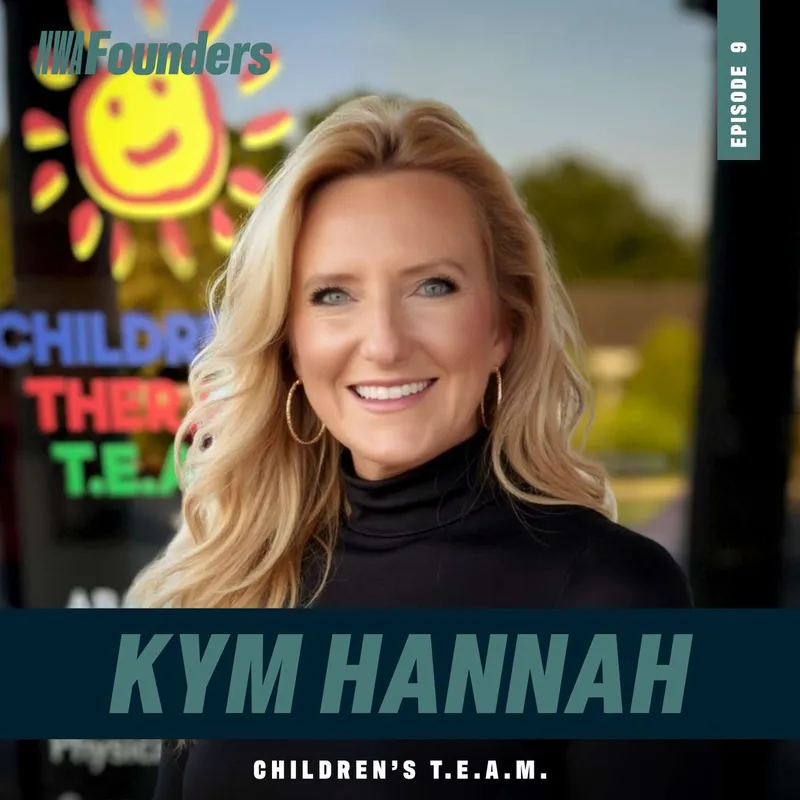
Kym Hannah & Cindy Watson, Children's T.E.A.M.
What happens when two passionate therapists come together to create a one-of-a-kind resource for children with developmental needs? In this…
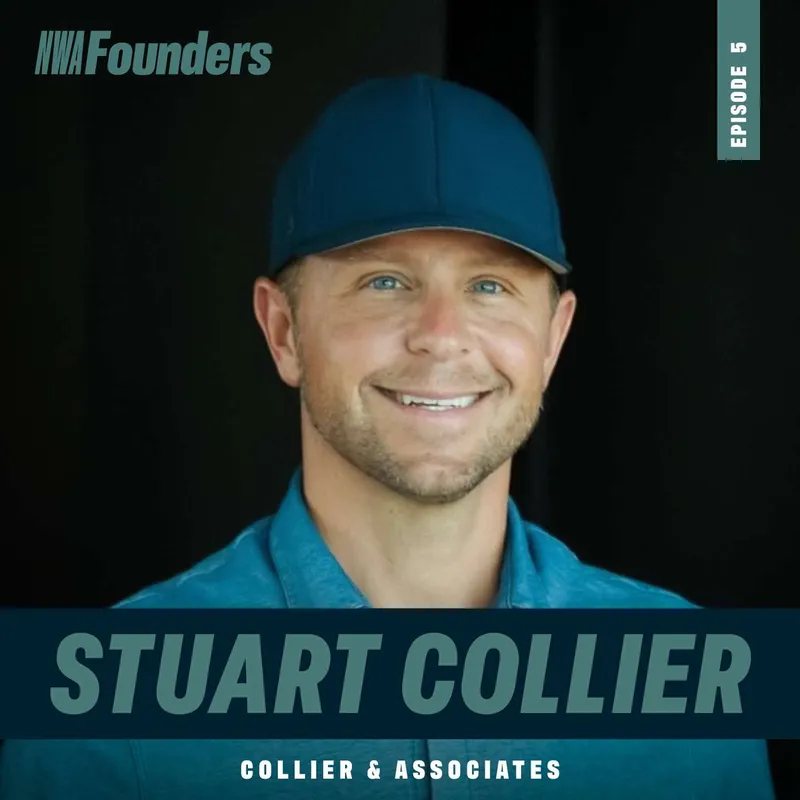
Stuart Collier, Collier & Associates
What does it take to build the largest independent real estate brokerage in Arkansas? For Stuart Collier, the answer lies in resilience…
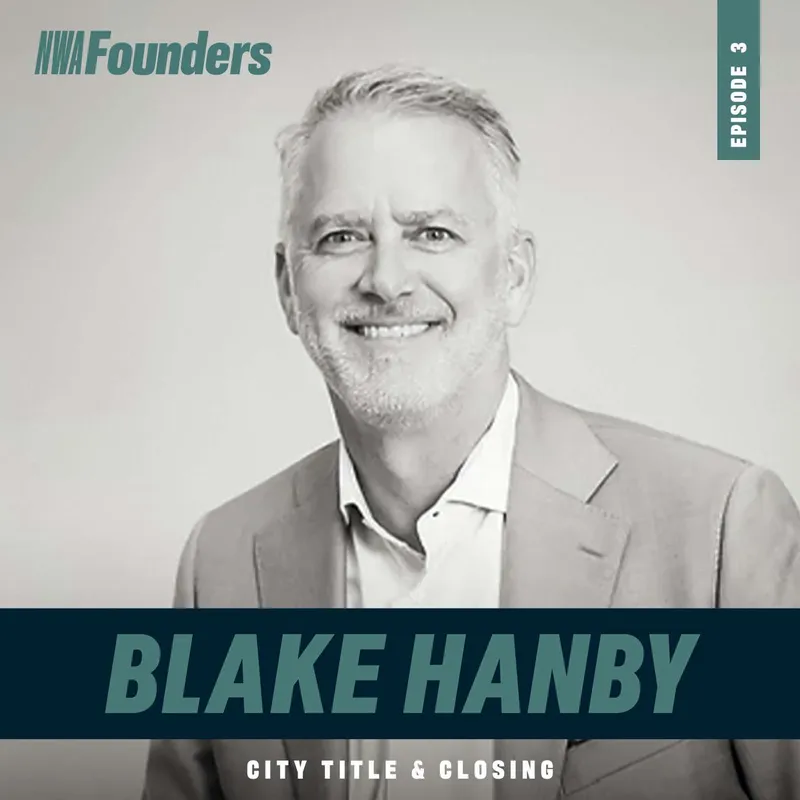
Blake Hanby, City Title
What happens when a Springdale native leaves a safe corporate role to bet on himself during a market crash? In this episode of NWA Founders, we…
The NWA Founders letter
The biggest takeaways, every other Tuesday
The new episode and its biggest takeaways, the big moments worth jumping to, and a short roundup of Northwest Arkansas business. No issue has gone out yet, so if you sign up now, you’ll get the first one.