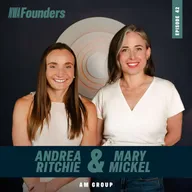
Andrea Ritchie & Mary Mickel, AM Group
Cameron Clark and Nick Beyer talk with Andrea Ritchie & Mary Mickel of AM Group in Fayetteville, Arkansas.
What would it look like for your company's message to actually connect with its biggest stakeholder? The local public.
Chapters
Key takeaways
- If you don't tell your story, someone else will: The most successful businesses are intentional about shaping their narrative. Whether you're launching a startup, expanding into a new market, or navigating growth, clear communication builds trust and prevents others from defining your story for you.
- Relationships are still the ultimate competitive advantage: AM Group's success has been built on authentic relationships with clients, journalists, community leaders, and partners. In a world filled with automation and AI, genuine human connection continues to create opportunities that technology can't replace.
- Growth requires both strategy and culture: As companies scale, systems and processes matter, but so do people. Andrea and Mary emphasize hiring great talent, creating a healthy culture, and building a business that supports both client success and employee well-being.
Clips 2
Show notes
AM Group founders Andrea Ritchie and Mary Mickel have built one of Northwest Arkansas’ most respected communications and public relations firms by helping organizations tell their stories better. In this conversation, they share how a chance friendship evolved into a business partnership, why communications should be part of every company’s growth strategy, and how authentic storytelling can shape everything from local restaurants to billion-dollar development projects.
Summary
Andrea and Mary walk through the early days of building AM Group, growing from a handful of clients to a rapidly scaling agency trusted by some of the region’s most influential organizations. They discuss the importance of understanding your audience, owning your narrative before someone else does, and why relationships remain one of the most valuable assets in business. Their experience spans hospitality, tourism, real estate development, technology, economic development, and community-building initiatives, giving them a unique perspective on what makes organizations stand out in a crowded marketplace.
The conversation also offers an inside look at modern public relations in an era dominated by AI, social media, and nonstop information. Andrea and Mary explain why businesses can no longer rely on their products to "speak for themselves," how strategic communications influences growth, and why founders should view storytelling as a core business function rather than an afterthought.
Perhaps most importantly, they share lessons on building a values-driven company, choosing the right business partner, scaling a team without losing culture, and creating a business that serves both clients and employees well. For founders at any stage, it's a thoughtful conversation about growth, relationships, community impact, and the power of telling the right story at the right time.
Follow us on LinkedIn NWA Founders
Follow us on Instagram @NWAFounders
Follow us on YouTube NWA Founders
For guest suggestions or inquiries nwafounders@gmail.com
NWA Founders is a voice for Founders, Owners, and Builders driving growth in Northwest Arkansas, and is hosted by Cameron Clark and Nick Beyer.Links and resources
Transcript
Read the full transcript (15,086 words)
Looking for something across every episode? Search all the transcripts.
Skip past the transcriptWhat is AM Group?0:00
Because there is so much noise in the news, having an incredibly authentic message and something that resonates across all key stakeholders is more important than ever.
What would you say to the person who's like, "My product will speak for itself"?
There is a plateau to growing your business. If you're new, you're shiny, there is a moment in your business where the top of funnel stops.
How much of your clientele comes to you with a mess?
When we onboard a client, we are thinking through what the crisis could be.
We do work with national brands that come in and wanna have a presence in Oklahoma City. It's
what sets us apart, is just knowing this market.
We're sitting here this morning, um, Mary Mickel and, um, Andrea Ritchie here in y'all's office in downtown Fayetteville, AM Group. You guys have been doing, like, communications PR for the last
seven years here, but really AM Group the last three, four, correct? Correct. That's right. Um, and it's really impressive.
I know just the little bit we've gotten inter- gotten to interact thus far over the last, you know, six months or so, just seeing, like, the quality of client that you have, the amount of, like, respect you have in the community, and just the different types of companies that, that come to you is, is amazing.
Um, so excited to kinda dive into some of y'all's story here. Um, will each of you give some background to kick off?
Absolutely Yeah. Yeah. And thanks for having us. Yes, thank you. This feels weird being on this side. See if
we can get you off guard. Yeah,
exactly, exactly. Andrea, after- Sure ...
after you. Um, I went to school here at the U of A with an ad PR, um, bachelor's degree.
From there, I got a master's in sport and rec management, and I went to Visit Bentonville, so tourism. Mm-hmm. And I was the Bike Bentonville director for about two years, and then I transitioned with my comms background to their interim, um, communications manager.
Mm.
Uh, at the time, CJRW, a Little Rock agency- Mm
they
were, um, advising o- uh, advising us on a, a couple of issues. So, um, met, who is now my mentor, uh, Maxine Williams. Mm-hmm. She, uh, hired me at CJRW, and I was there for about four years. And that's when I met Mary. Mm.
Yeah. Um, I'm also a U of A grad, a BA in journalism, focus on ad PR, so we're both Fulbright, uh- Mm-hmm
college graduates, uh, very proud of that. Um, so, and through college, we both worked in restaurants and bar attended and- Yep ... um, put our way through college, um, waiting tables. Mm. Um, and we loved it. And, um, so then from there, um, I graduated, and 10 days after I graduated, I moved, moved to, uh, Napa Valley, California, um, and worked in, um, a hotel there, um, in guest services, and then was able to shadow, um, the woman that was in charge of their PR department and realized that, hey, I can do PR and I can do
hospitality.
Mm. And that was a light bulb moment for me. My husband was in culinary school there. Um, so we were there for about a year and a half, and then I, um, got a job in San Francisco working for another hospitality PR agency. Wow. And so worked there for a little bit. Um, and then my husband's dad, um, became sick, and so we decided to move further south, but we weren't quite ready to move back to Arkansas yet.
Mm. So we moved to Austin, Texas, um, and we were there for about 10 years. Mm. Um, and while I was in Austin in 2012, um, I created an agency called Resplendent, um, with, uh, with my former partner there. Um, and our focus was, uh, 100% hospitality, um, or, um, experiences. So anything you could eat, drink at, a festival, a venue that you could listen to music at, that was really our focus.
Um, and at the time, there weren't, um, there wasn't, like, a midsize PR agency that could help service these up-and-coming chefs, these
up-and-coming entrepreneurs there. Sure. So we helped fill that gap. Mm-hmm. Around 2016, 2017, I just started jonesing for Arkansas. Um, I knew I wanted to have a family. I knew I wanted to raise my family in Arkansas.
Most of my family is still here. Mm-hmm. Um, and so we started just looking into Northwest Arkansas. Um, I met my husband at school in Fayetteville, um, and we, yeah, we just started looking for business here. So our first client under Respondent was Fayetteville Roots Festival. Mm-hmm. Um, and did a couple of years of Fayetteville Roots, um, and then we reached a point where we had critical mass enough for me to move here, um, and start the Arkansas branch of our agency.
Wow. It feels like, um... And thanks for sharing both y'all's stories. Just thinking about, like, the industry as a whole right now, it feels like it's really convoluted with just so many different channels of communication, and I mean, what's the- When you're talking to a client, potential client or a
current client, what's the value you're pitching them on?
Or like, how do you, how do you help them like, you know, see through what's kind of like a lot of- Break through
the noise?
Yeah, break through a lot of noise. Yeah. That's a-
Yeah. It really depends on their target audience. We have to reach them where they are, so it's sitting down with them, really understanding their target audience personas, and figuring out where their channels, where their audience channels are.
Yeah. Yeah, making sure that, um... I mean, if you're, if you're thinking of a, a financial investment firm or private equity firm, we're not doing TikTok for them- Yeah ... um, likely. Um, or, um, we aren't, um... W- it, it just depends on what they're needing and what they have to say at the time, but I think that the core of it is if you aren't owning your own narrative, people will own it for you.
And so if you don't control your story from the beginning, people will go tell your story in a way that isn't authentic to what
you are doing and what you intended to be, to be said.
Give an example of that.
Yeah. Um, yeah, that's g- that's great. Um, Marcum Hill. Yep. Uh, Marcum Hill, uh, moved to Austin to Fayetteville, and saw all these yellow signs in- Mm
all of the yards around Fayetteville that said, "Save Marcum Hill." We ended up being the PR team that was, um, here to support and publicize Marcum Hill, and, um, there wasn't a lot of communications at the beginning around what they were going to do- Mm ... on Marcum Hill. And so when we engaged with Specialized Real Estate Group, um, we specifically helped tell that story of conservation, of sustainability, of the really sound development that they were going to do.
Mm. Marcum Hill was gonna be developed no matter what. Mm. That land was for sale. Someone was gonna buy it. Someone was gonna do something. The city of Fayetteville is incredibly lucky that it ended up being Jeremy Hudson that was doing that,
and we were able to help tell that really thoughtful, intentional story- Mm-hmm
about what they were doing on Marcum Hill in a way that- was palatable to audiences, that helped them immediately understand that this is something that will be good for the community. Yeah. And y- I mean, a- Andrea- Yeah ... runs that account, so I'm sure she has more to lend on that front. Absolutely.
I mean, and what they continue to do with that space, right?
Like, they just started phase two, and so getting that narrative out there from the beginning, Mary started that conversation, started activating the, the property- Mm-hmm ... well before it was starting to get developed, um, was a very important piece. And of course, neighbors, Fayetteville doesn't like development as, as- Doesn't love change sometimes.
How much of PR is putting out client's fires?7:30
Doesn't love change. That's
a, that's a better way to say that. Yeah. Yeah.
Yeah. Um, yeah, Fayetteville doesn't love change. And so getting the story out there before people, as Mary was saying, start forming their own opinions
and, um, making up their own stories is just one of the most important pieces of what we do.
Yeah.
We're having to come in and correct a lot of facts, um- We just had to ... to do cleanup. Yeah. And so it's, it's better to come in with a proactive strategy- Sure ... before people form their own uninformed opinions.
How much of that is your world, though? I mean, how much of your clientele comes to you with a mess- Hmm
versus like, "Hey, we..." I mean, it takes- We- ... a lot of forethought to say like, "Okay, I run this business. Here's what I'm trying to do. With all the other things going on, I need to make sure that I own the story be-" Like, that seems like that would be lower on someone's list who has a lot going on. So how, how many- Our- You know, like talk- Our-
talk about that ...
our job is to get to the client and ensure it doesn't happen. Yes, we clean up- Yeah ... some messes. We do clean up some messes. Yes, we do crisis communications. But when we onboard a client, we are thinking through what the crisis could
be- Mm-hmm ... and planning for that. Yeah. Making a crisis communications plan from the get-go, and so that we avoid most of these problems.
Yeah. Professional catastrophizers.
Yeah, it's exhausting. It is. Um, but yeah, I mean, it, y- it, it takes a mature business owner to understand that if communications isn't in the room on day one, you're already behind. So getting ahead of that, especially if you have a complex business, especially if, uh, the public is one of your key stakeholders, making sure that communications is a part of your strategy, whether that's in-house, whether that's an agency like us, whether you hire- Mm-hmm
a consultant just for a stint of time, making sure that someone comes in and helps develop your key messages and distill your message in a way that's understandable to your stakeholders, that's key for, to doing business, no matter what you are. If you're a, if you're a pizza shop, we represent Woodstone.
We love them. It's two dads- Mm ... running a pizza shop. They still want their core messages out there. Mm-hmm.
What would you say to the person who's like, "Whatever. I don't care what people think
about me. I'm gonna do a good job. I'm gonna show up. My product will speak for itself"?
Great question. Yeah. I mean, I think that there is, there is a, there is a plateau to growing your business.
Mm-hmm. Um, and then especially if you're new, you're shiny, there is a moment in your business where that, the, that top of funnel stops- Mm ... and you need that longterm brand aware- awareness. Mm.
That's good. Talk about, I'm curious, so one of the things I read online was y'all were on a walk when you decided you wanted to be bu- business partners.
Um- Yeah, we like walking. Tell, I don't know, g- like give some insight into that story, but then also just like for people who are like choosing a business partner, like- What do you, how do you do it?
Yeah, this is, this is a fun one. So we met whenever I was at CJW, and Mary was, of course, respondent Arkansas- Yep
office here. Um, we had the same nonprofit client but did not know. We were working on two separate campaigns.
And then another client of mine said, "Hey, you two need to meet. I think y'all live close to each other." Mm-hmm. So we met at ONF, our favorite- Mm-hmm ... place to go get coffees. Um, and we sat down. I think it was about an hour-long conversation, and we talked client philosophy.
We talked, um, why we are in Arkansas, why we love it here. And then I think I texted you that night, and I was like, "Hey, I wanna work with you."
Yeah. I thought I was being set up on a friend date. Moving back, uh, to a new, uh, place in your mid-30s with kids, it's hard to make friends. Mm. Um, so I was really excited.
I was like, "Yay, Andrea wants- Mm-hmm ... to be my friend." And she was like, "No, I wanna work for you." And I was like, "All right, well- No, I wanna be your friend too ... and we were friends. But, um- And we,
and we were friends for about a year- Yeah ... before we even discussed working together. Correct.
Yeah, so and it was a moment where it was kind of this perfect confluence of universal timing-
that came together of, um, where I was going with the business, um, and what she wanted to do professionally. Um- The
timing was, like, I mean- The timing was great ... incredibly perfect.
Mm. I was walking up the hill with my three-month-old at that time- Mm-hmm ... in the stroller, and Mary was like ... And I had just left CJW.
Mm.
And I went to Mars Agency. I don't talk about this very often. You will not find it on my LinkedIn 'cause I stayed there three months. Mm. I left CJW, which at that time was, I think, a 70-person agency, to Mars Agency with, I mean, I, I don't wanna say the wrong number, but offices all over the world. Mm. And I was put on Keurig/Dr Pepper account, and I managed all the activations in Sam's Club.
And I hated it. It was the first time I ... Well, I had been working on all these community accounts. I was working on Arkansas Tourism, Arkansas Scholarship Lottery. I was working at Hou- on house furniture. And then I'm working on a billion-dollar account that made no difference to my community, and it was just such a grind.
And so I'm walking up the hill. We live about a block and a half from each other, and Mary's getting in the car. And she's like,
"Hey, how's it going at Mars?" And I just look at her, and I was like, "I made the worst mistake." She's like, "Let's talk tomorrow."
Yeah. It was really great timing. So but I think- Yeah
as far as choosing a business partner, I mean, having the same philosophy, um, the same values, the same work ethic. We are very hard workers. We, we- Mm-hmm ... work differently. We have different styles, but we are very, very hard workers. Um, we also are- Same season of life ... same season of life with young kids.
Family's first for us, and we wanna make sure that the business that we created worked for us and our schedules for our family. Mm. And then- Um- ... going off of that, we're
also millennials. We saw our parents grind hard. We are trying to make an- we are both trying to make a culture that impacts our employees, that make our employees want to work with us, work with our clients.
Mm-hmm. Again, Mary said the, the no asshole policy. Mm. That's for us, and that's for our employees. Yeah.
Yeah.
Um, and then just making sure that we have perspective in everything that we do. Something I've said since w- I founded the original agency in 2012 was, "We're not curing cancer." At the time, we were really talking about luxury food and beverage, so I think having perspective on what we're doing is incredibly important.
Um, we, we do take our work incredibly seriously, but we don't always do the same of ourselves. Mm. And I think that that's really important, and that was, um, a moniker of one of the organizations I worked for previously that really stuck with me because it, it matters.
And we're very like-minded, but we have different perspectives on a lot of things, and that makes us work harder and do better.
I often come to Mary, and I'm like, "Hey, I need to think, I need your brain to think about it in a different way than mine." And we often get to a better place because of that.
So talk about the first, like, inception, beginning of the business. Like-
Yeah. Um,
so we've-- The AM group came to be because, um, the original agency, Resplendent, was doing business in Arkansas, and, uh, at the same time, I was recruited to go work in-house at AcreTrader.
Um, they had just raised, um, just raised money. Um, they were looking to expand their base, and so-- and they needed an in-house communications person, and I had been my own boss since I was 25, and it was really interesting to me. Um, it was also at this moment where while the Arkansas office was growing, it's hard to have two founders at the top, and so by hiring someone that could come in and run the Arkansas office that wasn't necessarily me, it really looked good on the books.
So, and I had found the perfect person in Andrea to run the Arkansas office. So the intention was, I'm gonna go try this in-house, um, role, and Andrea can then run Resplendent and, um, and really help develop our Arkansas office. She's been here
for a very long time. Um, it make-- She has a great connect- y- great network, great connections here, a whole different set of connections than I had, which I loved.
Um, and so it made sense for her to come run the business. Um, so that was the initial thought and plan was, "I'll do this, and then I'll come back later." Um, and it didn't end up working out that way. Um, my partner in Austin decided Arkansas wasn't a priority for her. Um, she didn't necessarily want someone that wasn't in the daily operations, um, that wasn't a full-time partner and which made sense.
And so we exited. Um, I was able to take my Arkansas book of business, and part of those terms were that, um, within a year, we had to rename. Um, and so we did. We came up with this really clever name, AM Group. Um, and, um, so that happened. There's a, there's a
Ted Lasso story in
there. Yeah, exactly. Um, but yeah, so Andrea started running, uh, running the business in
2022 while I was in-house at, at AcreTrader
And how common is it for an agency owner, founder to enter into, like, an in-house role at a company?
Is that common, uncommon? Apparently
not common. Okay. Apparently not common. Um, but I wanted to learn. I wanted to work cross-departmentally. Mm-hmm. I had never had an HR team. I had never had a finance team. I, um, never worked with analysts before. Um, I certainly had never talked about farmland investing, and so I, um, my three years in-house at AcreTrader w- were a massive- Mm-hmm
education, not just from the communications aspect, but from how to run a business, how to forecast, how to predict churn, how to, um, work with all different types of departments within a corporation. Um, and I learned so much and made s- really great friends along the way.
And then on the opposite end of that, I had never started a business before.
Yeah.
So whenever we, we started AM Group, we had so many
systems in place from her startup, um, venture with Resplendent. So we started with the bones, and it was wonderful, but my background, you know, being in, um, agency life at Mars Agency and CJRW, I have a lot of agency systems, like- Mm-hmm ... at scale. Yep. So it's really fun.
We have that startup, um, culture and systems, but we also have some, some background in scaling. Yeah,
complimentary.
Yep. How do, I mean, so I, I, I, I feel the, the love and care that you have for, like, just really, like, local identity, um, businesses. But, like, how do you, how do you make a business off of these, like, small businesses that maybe just, you know, are, are, are just starting?
And I don't... Yeah, how, how does that work?
It's an important piece to what we do and who we serve. Um, we often meet clients where they are and prioritize based on their budget. Um, we
also work with some key, key clients that help us work with the mom-and-pop- Mm-hmm ... shops. Yeah.
Yeah, absolutely. So that was a big goal when we came to Arkansas was it's not just hospitality that we're working with.
It's not just small mom-and-pop businesses. We were going after established businesses- Yeah ... that had a strong track record, that had deep roots in Arkansas, that had sustainable revenue. Um, so that was important for us, um, to really diversify our portfolio so when things like COVID happen or an economic crisis happens, that our portfolio isn't completely thrashed because of it.
Mm-hmm. Um, and so that was, that was important. But I think for some of these small businesses, it's meeting them where they are, but giving them bite-size, um, tactics and applications that they can do for their business to help it grow, and those types of tactics can scale over time based on the size of their business.
Mm-hmm. Um, and- Often
grow with
those businesses. Sure.
Correct. Yeah. Mm-hmm. Yeah. And that's exciting. I mean, I love working with business owners of all levels, of all types, of all different, um, industries. Um, it's, it's really fun for us. We're curious. We like, we like to learn. So y'all form
AM Group in '23.
Mm-hmm. You're at Acre Trader, is that full-time?
Full-time.
Okay. Yeah. So you're there full-time. Mm-hmm. You're running this- There's,
there's two of us. Okay. Yeah. Yes. There's you,
you two. No. No. No. Okay. Just- It
was, it was me and an account coordinator. Okay. Okay. Yeah. Yeah.
There's two of you. Mm-hmm. Um, how many clients did y'all start with?
And, like, what, what was your day-to-day- Yeah ... with y'all, and then what was Mary's involvement in that?
Yeah. Um, again, Mary's involvement was systems. Okay. She had all the systems in play. Um, she's helping close books every month. She's understanding if we're healthy or not. I'm jumping in, never owning a business before- Mm-hmm
and so I'm getting schooled in that,
that piece, right, the back end. But, um, at that time, I think we had six clients. Mm-hmm. We had six, and we, we quickly grew to around 20 by the end of the year. That doesn't make sense. I think it was, like, 15. Um, and we, we scaled with people as well. Um, we, we really focused...
At that time, I think we were closer to, like, 75% hospitality. Mm-hmm. But, um, we, we started entering the Little Rock market at, at that moment, and that quickly scaled us with about five businesses there.
Yeah.
Um, for me, it was really important to build culture from day one. Um, that, that's something I, you know, in my working life from a young adult on to now, it's just such an important piece.
It's where, it's where we spend more time than we do with our family, is work. So to me, from day one, it was all about culture and making it fun to work here.
Yeah. And then I would plug in at night.
Um, so- Helping, yeah, helping do the books, helping do projections, numbers, making sure that if Andrea had an issue with a client, a blocker with a client that she needed- Mm
some outside opinion on, that I would come help, and then new business development. So we were always, um, getting, um, people that would reach out to us, but then we were always thinking about- Mm ... outbound and who we could reach out to that could benefit from our services. Um, there were a few meetings that I would sit in on for- Mm
new business development, but I knew Andrea was an incredible accou- account services, um, rep for us because she had done it for CJRW for so long, and people liked her so much that they brought her o- over to their businesses. Mm. So Andrea had that on lock. Um, and just making sure that financially we were sound and we were healthy, and that, um, our profit margin was something that, um, was, was respectable, um, and something that could, could see us to the
Landscape of PR & Communications in NWA22:30
next year and the year after that, so.
So talk about this industry for people like me, who know nothing- Mm-hmm ... about communications, nothing about PR. Like, and, and specifically talk about this market. Like, talk about the industry and talk about the market. Like, what Yeah, t- talk about why the industry exists, and then who in this market was doing it, or did you guys see a gap or how it was being done?
Yeah. How this
industry has been done in the past and how you guys are doing it. Just a little bit about- Yeah ... like-
We're, we're absolutely filling a white space, right? Um, I was talking about Mars Agency, CJRW. Mm-hmm. We have a large amount of big-sized agencies here, and then we have a bunch of freelancers or folks that are one or two people.
There's, they're w- and what we've seen, we haven't, we haven't been able to identify a firm- Mm-hmm ... that's mid-size that, as Cameron, you're asking about, like, those small
startups that service startups up to these big, bigger flagship, um, accounts. Yeah.
Yeah, so I think that, um, someone that I would think helped pave the way for communications in Northwest Arkansas is Elise Mitchell.
Mm-hmm. So she started Mitchell Communications, um, and then it was sold to, um, and acquired by another organization, a Japanese organization, um, and now they don't do PR anymore. So, um, like Andrea said, there's these big houses, and then there's these freelancers, and there's no one mid- middle market that can help service, um, pr- again, from a pizza shop to an investment firm, and everyone between, everyone in between.
So that was something that we saw, um, was great opportunity for us. Um, we also are very incredibly hands-on with our clients, um, and that's not necessarily the, the high touch, uh, way that a lot of these bigger organizations were, were working.
And we think that comes from our hospitality background- Yeah, mm-hmm
getting our way through college. Yeah,
yeah. Why do you think there
wasn't or is not still a focus on- in this mid-size market? Is it, is it genuinely 'cause people are like, "Well, I don't wanna work with a pizza shop who can only pay this much," versus a big company that could pay this much? I
think the diff- It's a great question
I think the difference is the diversity in our industries that we serve, honestly. Like, you will see there, there are a few freelancers that really do service hospitality accounts. You will see a few freelancers that do a few, um- Development ... development. Yeah. Mm-hmm. But you're not seeing an agency service- That can span industries
that can s-
Yeah, exactly. Yeah. Yeah, so I think, I also think it's education, right? Mm-hmm. So, um, a lot of these businesses, um, sometimes PR is the last thing that they're considering, and so I think as you, as, um, channels evolve, as, as the way that you're getting your news evolves, the way that you're, um,
whether, whatever type of news that is, there's so many different ways now to get your news.
Um, and then you think of let's bring in, let's bring the robots into the conversation. When you're thinking of how you're searching in general and how you're looking up anywhere from a vacation home to who's gonna be the pest guy that comes and, like, deals with my mosquito issue this summer, um, now Google has their AI snapshot at the top.
Um, that u- didn't used to be the case. Um, about 68% of those references are earned media citations, meaning something that, um- Mm ... an outlet like The New York Times or Arkansas Business has written about that is showing up- Mm ... as part of that search, and all of the LLMs are picking that up. So- Wow ... it's picking up owned content.
It's picking up earned media. It's picking up, um, your website and what you're talking about on your blogs. Um, that is the new evolution of search, and typically the people that are helping place those earned media articles are publicists like us. Um, and
Client success story: Experience Fayetteville27:00
so that education of the requirement for PR and for some type of communications work is important.
I also think that because there is so much noise in the news, having an incredibly authentic message and something that resonates across all key stakeholders is more important than ever to cut through all of the things that are flying at us every single day in order for that to resonate. Um, and so it's even more important to have communications as part of the conversation for any type of business.
Um, yeah.
Consistency is key, right? Yeah. Everything that Mary just said, the owned content, the earned media, you want it to be the same as GEOs, um, ranking it- Yeah ... and pulling the data.
So talk about those early days, the six clients you guys had. What did, like... I mean, some of those clients still clients.
Yeah. Maybe talk about one of their stories and something you guys did for them that just you remember, early days.
Absolutely. So-
Love Specialized Real Estate Group. They've been our longest standing client, um, but I don't wanna keep bringing them back in. Um, so let's talk Experience Fayetteville. Yep.
We've serviced Experience Fayetteville f- this is our fourth year. We did social media for the first three years, and now we are their public relations firm Um, that was goal from day one- Mm-hmm ... when we started AM Group. We wanted to tell Fayetteville's story because we live here. We, we are gonna continue to live here.
This is our home.
We love Fayetteville.
We love Fayetteville. And so, um, we started with a very small scope of work where we were just interim social media, uh, content creators. We didn't even have a longterm contract.
We were month-to-month with them. Yep. And we were like, "Cool, we'll do it." We'll
do it. We'll do it.
What's your budget? Okay. Yeah. It doesn't matter. Yeah. So, um, we, we serviced that account, I would say probably over-serviced a little bit, and that's okay, to
help tell that story right through, through social media. Um, we ended up hiring up for it. Mm-hmm. We, we ended up getting social media managers. We, um, ended up going to different conferences and taking different classes just so that we could be, you know, um, stood up in the social media space.
Mm.
And from there we, um, we, we knew that our eventual pitch would be to take over the PR piece.
Yeah. And they had worked with a national agency, um, and we had seen that, and we had seen the earned media that they were getting from the national agency, and we saw some of their pitches that they were doing.
And while they were great, it wasn't the full picture of Fayetteville. So when, um, the time came for us to pitch it, our, our pitch was, one, you will be a big, you will be a big name on our client roster, which is important to us. Two, you will have us on your account. We live here. We give here. We
understand the stakeholders.
Three, they were very interested in really telling Experience Fayetteville's story to its residents. Mm. It had been so long looking at drive market- Part of our master plan- ... and national- ... and focus plan ... media, but often overlooked was the residents being in on the know on the first things that were happening in Fayetteville.
So it was really important for us to help tell that story to Fayetteville residents because who's the number one referrer of people to come to Fayetteville? It's us. It's people being like, "Hey, come see me and stay at this hotel. Come see me and I'm gonna set you up with all these restaurants." We want the residents to be proud of where they live- Mm
and to get all of their friends and family to come and stay here. So, and that's been a really good tactic- Mm-hmm ... thus far, and I think that resident sentiment is so important- Mm ... um, as you are building a DMO-
Yeah ... as well. And, uh, being, having a background in tourism, not many tourism bureaus care so much about, um, community sentiment,
and that was something that really stood out to us when we were reading the master plan, and we're like, "We wanna work with them."
Yeah.
Yeah, so that was, that was a really big get for us, um, and we signed a three-year agreement with them. So, and, and, but early days we just, we were patient. Hustled. And we were hustled- worked really hard ... and demonstrated our worth and our value- Mm-hmm ... and our also our understanding of not only how their organization runs, but how everything their organization touches, how it impacts us, because it does, 'cause we live here.
And we really had to understand how they work, how they get their money. Um, the stakeholders in Fayetteville, a lot of them are our clients.
Yeah.
And so understanding, um, that value and under- and communicating that clearly- Mm ... to, one, the community, but also tourists. Like rec- re- like Fayetteville's such an amazing space and place to visit, and it starts with our community, as Mary was saying.
Talk about, um, so it feels like
outside looking in, like, y'all are at this really cool inflection point where it's nobody's too big, nobody's too small. I mean, just like, it feels like y'all are just dominant in the space that you're in right now. But, like, talk about y- you're saying, like, just trying to kind of prove your value in the beginning and just freaking hustling.
Like-
Yeah ... I don't know. T- tell someone, you know, what, what... Yeah, what the- what do you have to do? What's that like? Like-
I mean, it- Being on speed dial. Yeah. Being on speed dial for a lot. Um- Answering
the freaking phone all the time.
All the time. All the time. Yeah. Um, we launched Ozark United, um, back in, 23 years ago this May.
Yeah.
And I'll tell you what, that, that was a learning experience, and it was amazing in a lot of ways. It was the first time I had ever organized a press conference to that scale. And getting the community to rally behind a
team that doesn't exist-
Mm-hmm ...
was one of the hardest things I've ever done. And to continue to keep them in the news cycle and keep updates around a team, again, that doesn't exist, is v- a very chal- continues to be challenging.
But it's also such an incredible story, and it's something that it was very important to get the community behind and rally behind. I don't think I'm answering your question. But, but, um, yeah, I think, I think from the early days, just starting with something with such a huge community impact really has got us off to the launching point.
Yeah. Yeah, I think that if we're on a retainer, we're answering your calls. Um, we're, we're listening to what you have going on. We're creating a strateg- strategic plan for you, um, to go out and help tell your story. Um,
but that you see the ROI on that through press that we get you mentioned and through panels and speaking engagements, through op-eds that we help you book.
Um, you see that impact where you get to authentically tell your story. We don't do pay-to-play placements for people. Mm-mm. So a lot of the newer clients that we've been working with have historically had a more old-school approach to how they advertise, um, and most of it are paid ads. And when it's, when it's a static paid ad- It's not, uh, it doesn't resonate as much, um, with, with your audience, so, and you don't get to tell your story in a way that you would alternatively with someone that their job is to come in and write unbiased editorial coverage of your business.
That hits in a different way. And so I think that that's been important that we have not only great relationships with Arkansas media, but even if we had the best relationship with Arkansas media, if we don't have an interesting and compelling story to tell- Mm-hmm ... they're not, they're gonna tell us no.
Um,
so we've, we've made sure that the clients that we work with do have something interesting and compelling, and then we've also helped divert some of those ad dollars, which it, print is still alive and well, and thank goodness. I love- ... like flipping through a print magazine, but that can't be the one note of your strategy anymore, and I think that helping people understand that approach, um, but then also seeing the ROI on that approach, um, has been important.
Um, we also, we help people through tough situations. Mm-hmm. Um, we help m- we help implore strategies for internal communications. We help write investor communications. We help develop board deck communications. Mm-hmm. So it doesn't just have to be through earned media. It has to be through all of your stakeholders that you're trying to reach and, and tell your story
to.
Talk about that part of the business.
Yeah. The-
Yeah, the, like investor communications- Yeah ... board communications. How does that look when you're, I don't, when you're
sitting down with a client? The
Yeah. So, I mean, it's really, a lot of it's quarterly, right? So if you are, if you have a board, an active board, you are going to report to them.
They're, they are essentially your, your boss, and they are your advisors. And so, um, making sure that you're meeting them, again, where they are and that you're not over-sharing too much information, um, that you're sharing an executive summary, that you are hitting them with the key points, that you are bragging on your organization on what they've done, that you're sharing the appropriate amount of data, um, that, and you're always laddering up all of these communications to the KPIs that you've set with your board.
Mm-hmm. Um, and so it's not just a bunch of fluff. It's not a bunch of extraneous information, that it is key points and facts and figures that the board needs to help give you the best advice for you to move forward as an organization. And when you're able to cut out all the noise and strip it down to specifically what you need to hear,
that really has streamlined a lot of our clients and the way that they speak with their board, and the way that they, uh, host efficient meetings, and that they become organized, and that they are not left with a giant presentation to take up the two hours that they might have with their board.
They can leave- Nobody has time for that. Yeah. They can leave the rest for active conversation. And stripping out that
fluff-
Yeah ... helps establish trust immediately. Yeah. Um, also, people have the attention of fruit flies these days. So keeping it short and sweet and, and informative is so important. Um, really hitting them and being transparent.
Um, sometimes the figures don't always look that great, but you still have to have that same level of transparency on the good quarters, on the bad quarters, um, because of the trust. And, and
we help find that story for the bad
quarters. Yeah.
Um, so talk about l- going back to the industry, like
You guys compete primarily, would you say, against, like, national firms?
Yes. Okay. National firms, um, or in-house, and I wouldn't even say we're necessarily competing in-house- Mm-hmm ... 'cause we can be a really nice complement to in-house marketing teams. Absolutely. Um, but just as far as, like, the services we offer- Mm-hmm
it's public relations. So what is public relations? Anything that's public-facing, any community forum, um, anything you're r- reading in, in the news. Um, it is, um, community involvement. Um, we do community engagement. We do community and brand partnerships, so getting with other like-minded businesses that share, um, a lot of your same- Core values
uh, core values, but then also y'all have different audiences, so let's cross-pollinate and reach a different audience that way. Mm-hmm. Um, brand messaging guidelines, really making sure that we're, at the beginning, we're coming up with what are our core messages, and how do we speak about this business? And that's not only good for clarity, um, but it's
also good for search as well.
Mm-hmm. The robots love consistency. Um, social media, we do a lot of content. We do a lot of copy. I'm writing about 60% of my day. Um- Mm-hmm. Wow ... whether that's a press release, whether that's a blog, whether that's, um, investor letter. It runs the gamut, but I'm writing all the time, whether that's a pitch to a journalist.
Yep. Um, so you have to be a really clear communicator and make it super concise because, especially if you're pitching a journalist, they're getting a million pitches every single day, so how does your head, how does your subject line- Mm-hmm ... stand out to them?
And piggybacking on that a little bit, talking about, like, establishing our business, it was established on relationships first and foremost, right?
Absolutely.
Just as we need to know our client's target audience, we have to know our target audience- Yeah ... which, most of the time, are journalists and writers. Yeah. And so it does us and our company really well if we truly know them, if we sit down and have coffee with them. We know their beats. We know who to send with the
Like, if we're
talking to an editor, we know what their, their, um, reporters are writing about, and we can speak to that. So we're getting to the right person at the right time and, and really understanding what they want to write about and, as Mary was saying, making that compelling pitch based on their beat.
Yeah, and, and letting them know why
it matters now. Exactly. Why it matters now to talk about this story based on all the other things that are happening in the world. Um, and so that, that is really fun for us. We, um- I love the chase. We- I'm also used to rejection.
Yeah, yeah, it happens. Yeah. Um, we, we know Northwest Arkansas media, but we, we go to Little Rock every other month to meet with journalists and editors- Yeah
just so that we can have our relationships there as well.
How, how do you balance, you're saying you write about 60% of the day, uh- AI versus original thought, combination of the two, how do you balance that today?
Yeah. Uh, I'll take, yeah. Yeah, you go ahead. So we, we have established AI guidelines
Balancing A.I. & Originality41:00
as every brand and business should right now.
Um- What does that
mean?
Yeah, so how and when do you utilize Claude, O- like, ChatGPT, how do you utilize that, and what are the company standards? So you've gotta think about privacy. Um, so if you're using a free account, don't share any of your business information on that account. Mm-hmm. Um, you have to think about anything for our organization, if it requires taste or judgment, we're not utilizing a robot for that.
So I use it for research. Um, I use it to run a piece of content that I've written. Um, I have it ... I have a, a chatbot that is trained in AP si- AP style- Mm-hmm ... which is Associated Press style. That's how we write for journalists. Um, and it will go, and it will edit my content based off of that. Um, we have it, we'll pitch a bun- I'll put a bunch of numbers in it, and I'll have the robot do math with me, which is really fun.
Um, but we have the guidelines where, number one, yes, use it for all of those things. We need to have a human look at it. Ideally- A human
touch ... a human touch at the end of the day that's gonna review it before it goes out. Um, we have to make sure that we're not, again, not using it for anything for taste and judgment, um, and that we aren't just relying on it to write for us every single day.
It, it doesn't make us sharp- It doesn't ... when we're doing that. Um, we also, we have a business account. We make sure that anything that, um, we're putting in there that could be considered client IP is, is redacted from the information, so they don't have any of our clients' information. Um, and we also, again, just require a buddy to look at it.
A- and ideally, it's someone that's not on the account with you. Yes. So when they're reading it, they don't have the context that you have when you wrote it. Mm-hmm. So we wanna make sure that it's understandable and, um, and palatable for them.
The biggest benefit for us is research. Yeah. Yeah. Researching journalists, researching their stories, quickly summarizing some articles for us.
Yeah.
And then we also like
to use it for baselines for clients. So when we get a new client, putting in, um, putting in their information into the robot and seeing what it pulls up about that client is super informative. So it helps us do kind of SWOT analysis. It helps us to do, like, this competitive set research- Mm-hmm
that, um, helps tell, tell us quickly their digital footprint- Mm-hmm ... that existed before they engaged us. Yes,
and it makes much prettier graphs than I do.
Uh, when is a client too big to use your service, or when, when are they big enough to bring it in-house, or how, how do you guys- Mm-hmm ... think about that as it relates to your business?
Yeah. I'll say we haven't found a client too big to use us.
No, I think, um, I think so. I think that, um, if you bring someone in-house, um, they typically don't have all the different areas of specialties that an agency has, although they are 100% dedicated- Mm-hmm ... to your business, so it's a trade-off. Um,
typically if you have an in-house communications expert- They're probably good at a handful of things.
So they either have killer journalist relationships, and they're really great at pitching editorial content, um, and they're a good writer, but they might not be well-versed on social media influencers, brand partnerships, all of those other things. Mm-hmm. So it really just depends on your marketing strategy and where you're trying to go with your business.
Um, but we haven't found a client too big for us yet. I think that, um, the challenge we would find right now is, is we are scaling, and we're trying not to break as we scale. Mm-hmm. Um, and so finding A players to come and work with us, uh, finding, um, enough office space- ... as you guys can tell in our tiny, our tiny office.
Um, but we haven't, we haven't reached that yet. M-
most internal communication specialists are generalists, as you were saying, and, like, probably shine at a couple things, where our specialty, again, is communications,
PR. Yeah. Um- Yeah ... so I, I would say we're experts. Absolutely. Our team are experts and on those service lines.
And so I think, I think with our seven-person, soon to be eight-person agency, we have the capacity. We have, um, different heads, h- different brains working on the account- Mm-hmm ... and to really, really break through that noise and understand problems at scale.
Yeah. I think back to your question, though, if it's a, if it's a company that wants us to come in and manage all of their paid media, manage all of their graphic design, manage- Mm-hmm
all of their videography- Yeah ... that's where we're not equipped to manage a client like that. We are one component of your marketing strategy. Absolutely. Um, and we, and we 100% say that. We've had businesses that have come to us and are like, "Help save our business," and we're like, "Hey, we can do the communications piece of it, and we are happy to introduce you to our friends and fellow marketers that, um, specialized in
Google Analytics, Google Ads- Graphic design
SEO, graphic design." Yeah. We have great partners that we refer them to that, but we are one channel of that broader marketing strategy. Um-
And it took us a while to get to that space, where we ... Because when we were thinking about growing, we were like, "Do we wanna be a full service agency?" And we did explore that for a good six months.
Yeah. Um, and ultimately, we have decided to hone in where we are good at, where we have our experience. So- Focus. Yep.
Well, I wanted to kind of get towards, so start at the beginning. Maybe like, then, then you came, rolled in full time, and then I, I wanna get to where we are, like, today. But is there anything, like, else in kinda, like, f- maybe year two to year three that, um, I don't know, that's a good story to talk about that, uh, helped form where you are now?
Yeah, I mean, just the growth. We,
we grew very, very quickly. I think, as I said, in January of '23, there were two of us, and by the end of the year, there were five of us. Mm-hmm. And that was just such a big learning curve for me, who at that time, I had managed one person, um, throughout my career, and I would say even that was indirectly.
So just learning different personality types during those two years, learning how to find the, the best skill set in our employees and in our people, and understanding who we want to work with- Mm-hmm ... and, and what makes AM Group better and our services better, was just, like, the biggest learning point for me in those two years.
Yeah. And I think, I think that's really carried over, and I think we're starting to see that, that really shine through. Yeah.
Fruits of our labor. Yeah. I think, um, when I was at Acre Trader, an- a big goal was
to have a boss. Um, and, and Carter is the CEO, but I wanted a marketing boss. Um, and, um, I did have that for the first year.
Um, but then I ended up running the marketing team, and so managing a multimillion-dollar budget, um, overseeing, um, a, a multidisciplinary marketing team, um, so brand partnerships, communications, um, digital media, um, earned all, all of it. And, um, I- while I found that I learned so much and we, we did a heck of a job, um, at the end of my tenure there, I found that communications really is my passion and that, um, I, I love pitching.
I love writing. I love pitching media. I love the dopamine hit when they say yes. I love to see the press when it goes live, and I was kept doing less and less and less of that while I was there. And so I had to have a hard conversation about leaving that organization
and coming back to AM Group- Mm-hmm
because that's what I wanted to do with my career. Mm. And I also wanted to work for a lot of different types of companies because I get bored easily. And I am very curious, and I wanna learn about all these industries. And, um, while hospitality was something I was really interested in starting the business at 25, as you grow up, your interests evolve, and I wanted to know about financial planning.
I wanted to know about real estate development. I wanted to know about how the city government works. I wanted to know about all of that. So I think that that type of interest that we both share helped really expand our client base. But the lessons that I learned while working in-house have absolutely impacted the way that we do business today.
So coming, coming to you today, the, I mean, y'all have such a diverse client base, how do you think about social media strategy for, like, between the different industries, and how do you land on, like, what the right strategy is? It feels like the, the original content
creation and, like, going to these editors is pretty similar across the board, but obviously, I mean, like you said, T- you're not doing TikTok for Natural Capital, but like Yes.
Yeah. That'd be great. Yeah. Love that. Um-
We're, we're seeing right now with a lot of, again, investment, development, um, we're s- we're seeing a lot of thought leadership on LinkedIn- Mm-hmm ... um, strategy there. And then again, what, what Mary was saying at the beginning before we went live, you're n- you're not gonna see Natural Capital on TikTok, but you are gonna see Experience Vable on TikTok.
You are gonna see these hospitality groups. Um, so I think, again, it just goes back to meeting where that, the target audience is- Mm-hmm ... and really understanding, uh, each industry, understanding, doing the, the target audience persona for each client- Mm-hmm ... and finding where, where these people are on social media, and meeting them and telling that consistent story.
Yeah. So- Yeah, IDing, there's ... IDing who they are,
where they get their news, then breaking it down to those channels, and then coming up with the core messages that we're going to be repeating for them- Mm-hmm ... month over month- Mm-hmm ... in different ways. Um, and then, um, making sure that we're going in and we're capturing authentic content on their behalf.
So whether that's photography, whether that's reels, whether that's, um, an ask me anything, like, live session- Mm. Mm ... um, we wanna be engaging with their audience based on who they are. Um, but the LinkedIn executive visibility campaigns are something that we're s- we're doing more, and more, and more of. Um, because when you think about how do people resonate with your brand, they aren't necessarily resonating with your company, they're resonating with the people behind the company.
Mm. So, um, getting the CEOs and leadership, making sure that they have consistent content, that they're, they're helping amplify the content that their brand is sharing, and that they're also sharing hot takes or
contrarian views on- Having a pulse- ... things that are happening ... is so important. Yeah. Um, also activating their employee base to be employee advocates for the brand is really important.
So helping set up a framework for them where there is a, a team on the ground that when your company posts, they know to repost, they know to say something with a comment, that they know to like and engage. The first several hours of when something posts on LinkedIn, w- the algorithm determines how that's gonna show up in your feed based on that early engagement.
Mm. And so making sure that the employees of your, of your organization are there, and they're, I mean, they're your front lines, right? Yeah. So making sure that they're activating your account and so more people see it, so you're not just talking into an echo chamber, is important. So all the social media strategies are different.
They're all little sweet, um, different babies that we help take care of- ... that we love so much. Um, but I mean, not, not one campaign is the same.
And- So let's, let's,
again, dumb it down for someone who's not in communications. Yeah. I come to you with my business. I say, "Hey, here's my business. Here's what I do."
W- what do you guys do from there?
Yeah. So we would then, once we understand your business and your needs, we also wanna ask about growth goals. Mm-hmm. We wanna ask about what are the benchmarks and what are the KPIs- Yeah ... that you've set for yourself that we understand. Based on those KPIs, then we would go and we would determine what strategies would best help realize those goals for your business.
Um, is that earned media? Is that- Owned content ... is that owned content where on your website that we're consistently coming up with blogs and articles and white papers and- Mm-hmm ... research, depending on what industry you're in, that would resonate with your audience. So when they come to their website and they're like, "Hey, should I trust these guys?"
They can read, "Oh, I do trust these guys because they clearly are the experts in their field." Um, if they're looking for more brand awareness, then we're gonna suggest that we really go hard on a PR campaign for
them- Mm ... and that we get a ton of editorial content placed for them.
Something that also sets us apart, and it's just a different channel, right?
And this is more specific to hospitality clients, is we, we have great relationships with micro, micro-influencers in Northwest Arkansas, and I don't believe anybody else is really utilizing them. So we have a book of about 40 influencers within Northwest Arkansas or Arkansas proper, and whenever hospitality changes a menu, um, they're launching into a new market, we are leaning on these micro-influencers to come in and showcase on their channels to their audience.
That's just one of the channels that we're utilizing, right? Yeah. May was talking about earned, we're talking about owned, but this is another, another channel that I don't think is being utilized that, that we've been doing for the past three years. Yeah.
So none of that is paid. Is that correct? When you say earned, owned, like- Yeah.
Yeah ... micro-influ- That's just, like,
Partnering with national brands coming to NWA55:00
y'all have relationships I pay you a retainer- Mm-hmm ... and you guys get to work. Yeah. None of that's like, "Hey, if,
if-" You're also paying for- Correct. Yeah. That's correct. I would say that some of the micro-influencers are gaining, uh, more notoriety- Mm-hmm ... and a bigger audience- Mm
and some of them are beginning to charge, and I think that that's something that we are navigating right now is when we're, when we're pitching an influencer campaign to a client, being straight up and transparent that some are going to be expecting either some type of payment or some type of in-kind- Mm-hmm
um- It's mostly in-kind with us ... in-kind type of- Mm-hmm ... um- Or a credit of some sort. Exactly. Yeah. So, "Hey, I wanna go to the AC Hotel on the new Walmart home office campus- Mm-hmm ... and I'm gonna stay overnight. I'm gonna go to the rooftop bar, and I'm gonna talk about it." So we're giving them a, we're giving them a night- Yeah
stay. Mm-hmm. We're giving them a comped experience- A credit of some sort ... and, yeah, and some type of credit. Um, also brand partnerships. So we are, we also specialize in when national brands wanna come in- Mm-hmm ... to Fayetteville and, um, really hit
the ground running with local media and local, uh, community members and local brands, we help plug them in.
A great example of that is Sweetgreen. Mm-hmm. We opened Sweetgreen in South Yard, and on the Walmart home office we introduced them to lots of local vendors- Mm ... so they could have a local juice- Mm-hmm ... so they can have local produ- produce, so they can have, um- Local DJ ... a local DJ. Mm. They can have puppies at their opening that you can adopt.
Yeah. That type of thing, so we help localize them. And then really es- and
really establish a relationship with the University of Arkansas for South Yard- Yeah ... specifically.
Yeah, and get, and just make sure that we're their boots on the ground. Um, and we did that for Shake Shack in Austin. We've done that for a lot of different national brands that are expanding.
Melting Pot.
Yeah, Melting Pot. Yeah. Yeah. And we did this for Dove. Yeah. Dove brands, um, when they did activations here in Northwest Arkansas. Oh, cool. Yeah, so
they would, they would activate Sam's Club par- uh, parking lots, and they would want, um, local youth to come in, and it was a self-confidence campaign.
And so we made sure that every single media outlet that would cover
something like that was talking about it. We made sure to reach out to- As well as influencers ... the influencers, to the local schools, to the local- Mm-hmm ... Boys & Girls Clubs, and make sure that they know that there's this really cool, compelling event happening this weekend, and it just happened to be for a national brand.
And a lot of times when you're working with a national brand, local outlets will look at you and be like, "Well, you guys have a giant ad budget." Well, they sometimes don't, and so we still have to convince them that- It's a great cause ... that it's a great cause and that it's editorial content- And it impacts, it impacts our community.
Yeah, worth writing, for sure.
How, um- How important is that and how important is that going forward? 'Cause I think especially, like, we've t- we've talked about this a lot. You have now national, I mean, tenants for, you know, talk about restaurants and stuff like that. Yeah. But just in general, like, you have investors now, whether it's real estate, I mean- Mm-hmm
big national real estate firms coming to do a development here. Yeah. Like, that is, that part of Northwest Arkansas is changing,
and sometimes they don't understand Northwest Arkansas. So you're bringing something in, you're bringing in a restaurant, you're bringing in a development, and it, and it might not land well if it doesn't resonate with the market.
Yeah. You just don't know the market. So talk about, like, has that part of the business changed quite a bit recently? And
Do you wanna take this one or I can? This, this one's
a little hard because with, with development specifically, like we, we already represent th- the best development firm in- Sure ... in Northwest Arkansas, right?
So I, I don't know if a, a national development firm came in and folks weren't happy about it, we would take it.
Yeah. I mean- ... I think I probably have a differing opinion- Sure ... which is good, um, for us to have- Yeah ... divergent opinions. But, um- Y'all should fight. Yeah. We, um, we, um... Yeah, I mean, I think
that if you're a smart organization and you're going into a new market, you should be considering the local stakeholders- Totally
and the sentiment. Sometimes projects get squashed now. I mean, oftentimes project gets squashed just because local sentiment is not on your side. Mm-hmm. Um, you need to have... You need to understand what is the city council, what have they been, what kind of challenges have they been facing, and what are resident sentiment to your development coming in their area.
So I think if, if... And for institutional investors or national firms that are coming in to do development, if they've done it in multiple markets, which they typically have, they, they have a marketing team that's r- likely hiring someone local, I hope, to, to be on the ground and help tell that story about why this national brand, this national investment firm, whatever it is, is coming in to do this thing in Rogers or Bentonville or whatever it is, and why it will benefit the community.
And so I think that it's
important for them to think through that. I think that Arkansas, especially Northwest Arkansas more than any other place I've been, relationships are so important, word of mouth is so important, um, that if you're not doing that, you will be... Y- you, you will fall on deaf ears, and you will face a lot of challenges.
Um, so my advice would be that you hire someone local, that you get a good idea of the market that you're coming into, um, for your establishment to be welcomed and to be, to be busy, and to even get tenants if you're just looking to lease office space. Like, how are people learning about you? But they have to,
they have to be solving a problem here for us to take it.
Well, yeah. That's, yeah, I think that that, that's from, like, a communications, but, like, advice in general is, like, learn your market. Get to know, get to know the residents. Get to know what the community sentiment is about it. I think about all these data center projects that are, that are coming in and that are being stood up ex- even in Memphis.
Like, they face a lot of, a lot of pushback on
that, and if they're doing their diligence, they should know that, and they should come in with some core messaging to help- Mm ... to help f- really tell what, what is, how are they not gonna be a burden on energy infrastructure? How are they, um, going to be creating more jobs?
I think that speaking to the economic development piece of bringing in a, a, a national brand into somewhere lo- hyper local like us, if we can talk about some of the jobs creations that are happening because of it, that goes a long way. But again,
we, we know Northwest Arkansas. We've been here 20-plus years.
Yeah. And so if a national firm comes here and tell, and tell- they're telling us the benefits, and it's falling on deaf ears, we immediately can know that. Yeah. We can know to move on or help them go somewhere else. Yeah.
Yes. So you're saying you know Northwest Arkansas. Is, thinking about the future, what's ahead, do you grow outside Northwest Arkansas, or is, or do you
I mean- Hmm ... feels like there's a lot of runway here,
um, still, but is it, is it yes to both?
We wanna be Arkansas's most trusted partner for PR. Yeah. Period. Yeah. Um, sure, there might be some outliers, but our focus is Arkansas. Yeah. 100%.
There's so much opportunity here- Mm-hmm ... um, that exists, and, um, we, we love talking about, again, the, the brands that strengthen our state.
Mm-hmm. We wanna be talking about how they're strengthening our state. And how they impact our community.
Yeah. And impact your day-to-day. Yeah.
Yeah. I did tell you, we do have one out-of-state client. Um, he's in Iowa. He's an a- he's an ad guy. Um, we have a pre-established relationship with him. Um, but he is our one outlier, and then again, we do work with national brands that come in and wanna have a presence in Arkansas.
Yeah, yeah. Yeah. Mm-hmm. It's what sets us
apart- Yeah ... in a big way, is just knowing this market.
Yeah. It's the, the value. Like- Mm-hmm ... I mean, I think what's so evident to me sitting here is, like, y'all just have ... Y'all's passion is
insane. Just the, yeah, it's real- Appreciate that ... and it's, like, the ... And I mean, who you want, like, pitching your news?
It's, like, people that, like, care about your news. Yeah. Yeah. Um-
Yeah, exactly. Yeah. Yeah, and it's ... And we also do national PR, so there's- Yeah ... a, a lot of our clients, we don't just hit Arkansas media. Mm. Um, we, we hit tech media, we hit, uh, financial media. We ... It ... There are a lot of companies in Arkansas that are doing things that deserve national recognition, so national PR campaigns are 100% part of our purview.
Mm. Um, and it's, it's really fun for us and-
In January, Mary and I, we were in New York. We met with 20 journalists throughout the country. I was just in Mobile, Alabama last week. I met with 25 international journalists. Yeah. So we're establishing those relationships and ensuring our clients are heard.
Yeah.
So but why does that matter to an Arkansas business? It doesn't
always. Yeah. Right? Um, but to some of our clients it does.
For, in this
case, for Experience Fayetteville, we want national journalists talking about us, so when people are considering their next vacation, that they're coming to Arkansas. Mm-hmm.
It matters for them. When, for a client like acres.com, uh, getting a hit in Fortune and Bloomberg, it matters to them because they don't just service clients in Arkansas, they service national clients. And so- Yeah ... we wanna tell their story on a national level because while we're pumped to work with local builders, national builders are their, are who, who they are going after.
Yeah. And so we need national outlets that are telling that story for us. Um, and that, that is something that I've been doing since 2012, is pitching national media. Um, and it, it ... And while it's- I would say it doesn't get, um, for the restaurant clients, it doesn't get butts in the seats immediately. It's long-term brand recognition for them.
Mm-hmm.
And that's important.
How much of your pitching national media is pitching Northwest Arkansas
as a location?
I think that there's- Yeah ... uh, there's... That's a great question. There's several, like, surprise of place kind of stories that you can tell. Mm-hmm. So again, back to Acres and Acre Trader, you think of these, like, tech hubs on the coast, and it's really surprising that we're, they're building what they're building right in Fayetteville, Arkansas.
Mm. And so I think that those type of stories resonate with journalists who are, experience fatigue with a lot of these coastal cities. Mm. It's fun and interesting to hear what they're building in a state like Arkansas that isn't known necessarily for its tech talent, that isn't known for its, um, next generation, um, tech businesses.
I think that that's important. Mm. Um, or f- for f- let's, let's call out Sage here. Mm-hmm. So we put out and help put out, their analysts do it, but we help e- we help amplify it, um, all of the market analysis that they do quarter over quarter for, um, commercial, f- uh, for multifamily, for warehouse spaces. Um, we are an outlier
in the macro environment as far as how we're performing on a commercial real estate level.
So when news outlets are interesting in covering, um, the real estate beat in a different angle, it is interesting how Northwest Arkansas is performing as it compares to everyone else. And so when you're an institutional investor and you're thinking about putting capital into Northwest Arkansas, you want to then think of, oh, well, Sage is someone that can not only broker this transaction for me, but they can also do the property management- Mm-hmm
for my building after I'm done, especially if they're not gonna be in Northwest Arkansas, which is typically the case. Mm-hmm.
That's awesome. Talk about y'all scaling the business. I mean, Cameron's kind of- Ooh. He's talked about this, but like-
Yeah ...
it seems like y'all are at an inflection point. We are. You guys have grown a ton, just hired Beth.
Yes. We did. Best of it. Yeah. Three, three months ago. Dream hire. Yes. Yes. Yes.
Um, just people in the
industry who we've talked to, I mean, have nothing but admiration, respect for you two, and then Beth- Mm-hmm ... the people you're hiring. So just talk about, like, where the business is at, how you're scaling, and, and maybe just kinda what the future looks like.
I've always... I want to hire people that I can learn from and that are better than me. Um, Beth is a proof point right there. She has such great experience, especially in the artwork space, nonprofit space. Healthcare space. Healthcare. Mm-hmm. I mean, uh, her experience is just such a great education opportunity for our firm.
Um, so that's a philosophy to me, for me, is hire, hire up, hire better. Um- We, we are currently trying to figure out systems because we're scaling rather quickly, right? Um, we're trying to figure out account teams, how, how to scale without, like, four hires from now, without
it all breaking down.
Yeah.
And so that's the conversations, like, I mean, we're literally having-
Right now
this morning. Yeah. Without reinventing the wheel, right? Yeah. What's something that you establish and that we can build and build and build on. Um, we also have been so used to managing, like, half of the business. Mm-hmm. So, um- And that's
how we've worked, right? Yeah. So Mary has half- has had half the clients, I've had half the clients since she's been back.
Yeah. Yeah. As directing the account, right? Mm-hmm. Yeah. And so trying to figure out where that goes. Yeah. 'Cause that, obviously that's why we hired Beth, 'cause we couldn't- Yeah ... continue operating that way. But we're about to have to figure that out again because the three of us can't operate that way. Yeah,
yeah.
And it, I mean, they're all good challenges. Mm-hmm. Um, we love ... We are very high touch when it comes to our clients, so, like, making sure, like, it's not just me and Andrea doing the pitch and then you're outsourced to someone else. Mm-hmm. Like, that's very important to us. Um, so the, the scaling and, and finding, finding, like, the unicorns like Beth out there in Northwest Arkansas that wanna come work with us.
So if you're out
there, call us. Um, but we're looking to hire right now. We're looking to, to grow, um, efficiently, to be, uh, smarter than we've done it before. We've made mistakes. We're trying not to make sure that things break. Um, but we're considering a lot of different systems, in-house new project management tools, um, new ways that we prioritize internal meetings.
Um, we also don't wanna meet to death, right? Mm-hmm. So there's so many meetings about meetings about meetings, and we have this happen with clients, so how do we keep ourselves out of all these meetings during the day and make sure that we can actually do the work as well? And,
What is the ROI on PR?1:09:30
and we want, going back to managing half the clients, right?
Um, we want all of our clients to get the same service. Yeah. So establishing SOPs. Yeah. Um, ensuring that we're all on the same page, that everybody's happy. I mean, that's, that's the main goal is that all of our clients are meeting their KPIs, making noise in, in the region, and- Delighting and surprising them.
Absolutely. And showing
them- Hospitality background ...
a legit ROI on their investment with us. Mm-hmm. Um, that is really important to us, and at, like, every single month we get better at demonstrating that, um, and, and more granular with how we demonstrate that. Talk about
that. What, what is that ... I mean, what, what, if I talk
Give me, like- Yeah ... real, like, what is the ROI?
Yeah. So, um, it could be, um, an uptick in inbound inquiries, listing of an architecture firm So, um, if they, if w- setting a baseline on, uh, how many people have been reaching out for new projects, um, we wanna know is that upticking because we got XYZ articles for them throughout the month?
Um, i- are they getting more hits on their website? Are they getting more reservations, more heads in beds? Yep. Um, are they getting more engagement on their social media? Are they getting more DMs, more questions, more comments? Mm. Um, are they getting, uh, like, the traffic to the website that then leads to a demo, that then leads to a call, that then leads to a sell?
Like, we wanna know that
whole customer journey and all the multi-touch attribution to where earned articles, blogs that they read, white papers that they downloaded, we wanna know how all of that plays into the journey and what the financial outcome is for the business. And we're
investing in software to be able to track all of this.
That's what I was gonna- Exactly. Yeah. Yeah.
So then, um, in, for instance, we'll do a groundbreaking campaign, they'll pay us our ret- our project fee, and then we'll show them what is the advertising value that if they would've purchased all of these- Mm ... articles, what that would've cost them versus what they paid us, and I think that that's a great demonstration.
And it
shows the reach, circulation
with each outlet. Mm. It's pretty incredible. The unique visitors per month. Yep. And so that way they can see firmly that, and, and, and a- ad, ad value can be hotly debated always, but it is a good demonstration of, um, of what they would pay to play instead of us just pitching those articles.
And then of course, social media stats. We love all of those. Mm. So we have a, we have software that goes and it tells us what was our highest performing post, what was our p- poorest performing post, um, what are, what are people saying about us. Um, we- And
we take that data, and we go back every month, um, for our retainer clients, and we report on that.
Yeah. Okay. And, and that highest performing post, we're looking at it and seeing how we can replicate it in a different way- Mm-hmm ... different lens. And then that, that pr- that worst performing post, we're figuring out why. We're not
doing
that again. Yeah. Yeah. Yeah.
Yeah. And then I think word of mouth too. So, um, something I've heard from clients is like, "Every time I open a newspaper, I'm reading something new about you.
Like, how are you guys doing it?" Like, when we hear that kind of anecdotal and that, I mean- Mm-hmm ... and that's, that's PR, and that's old school way of, of getting- Yeah ... ROI. But like, when people are talking about you, and you continue to hear people seeing you in the news and press, and hearing you on the radio on a podcast, like, that's also ROI for the client.
I,
I was, I was pitching yesterday to a potential client, and he was like, "I'm a 50-year-old man. How are you gonna raise awareness to somebody like me?" And I said, "You, you read Arkansas Business, don't you?" He looks up. We're on Google Meet. He looks it up. He's like, "How did you know?" On his desk. Yeah. Yeah.
So it's, yeah, just, yeah, meeting them where they are.
Yeah. But we love, we love software to report on the data as well- Yeah ... which is, is, is evolving every year- Mm-hmm ... with how, w- how we've done PR. The, what we have at our disposal today versus what we had in 2012 is insane. Yeah. So.
Talk about some of the accolades. Cameron, Cameron and I read on the website some of those accolades.
But maybe some of the things you're most proud of, client stories, maybe featured in- X publication or this. Like, there's, there's probably some really cool things over the last, you know, four years that you guys have accomplished. Just share some of those things.
Yeah. Um, recently I was really excited
to see a Drake Farms o- in Northw- Northwest Arkansas Business Journal front page.
Uh, Drake Farms, a $1 billion project- Mm-hmm ... over 15 years, it's gonna really help, uh, the housing crisis, and very responsibly, again, specialized real estate group. But just being able to tell that story and in a, a way that's easy to comprehend because that, that, that project- Complex ... is complex. Yeah. And so we were really proud of how that story has come out so far, and there's more to it that we'll continue to tell.
Yeah.
Um, something that is interesting that Modus Studios- Mm-hmm ... working on is a, a FEMA tornado shelter. It's a FEMA shelter. It's a FEMA graded shelter, and they are building it. Typically, uh, the code, um, th- the schools are going to have to do these moving forward. Uh, the code provides that you have to do it with concrete.
Well, they're gonna
test one and just got a big grant to do it with mass timber. And so we put out a press release about this grant and what they were building, and the response was overwhelming- Mm ... because it's something that matters to the state of Arkansas because guess what's our biggest weather threat is typically tornadoes.
Mm-hmm. So, um, and because Modus is so innovative, they're not just gonna leave it this, like, big box. They're gonna have it be multi-use for the school when, um, hopefully they're not having to use this tornado shelter. So they're doing archery ranges in it. They're doing all these rad things that kids wanna be in, be in and experience.
So when they do have a tornado drill, it's not so scary when they're all having to huddle down in this, uh, in this FEMA shelter. So, A, I mean, it's impactful for our community, but the way that Modus is innovative with these type of, of designs i- is awesome and people really care, and it resonates, and we had incredible media response to that.
Mm. Um, we also just had
Acres featured in Fortune, um, and that was really cool. Um, love seeing- Mm ... um, them in the national press, them getting, um, the accolades that they deserve because of all the incredible work that they're doing, and it's this incredible tech team that's built up in our backyard in Arkansas, and I love seeing national press talk about it.
That's cool.
Kinda wrapping up here, um, last couple questions we ask everybody, um, and y'all can both answer or just, uh, you know- ... take, take whoever wants to roll it out. But, um, you said you're doubling down on Arkansas. Let's even narrow that to Northwest Arkansas. Why build a business in Northwest Arkansas?
Um- I've been here 20 years. W- um, in 2006 it looked a lot different than it does today. So I've ... I feel like I've sort of grown with the business hub that it has developed into. So I feel like we are uniquely positioned to understand
how it was built and the nuances around it. And so, one, we wanna live here.
We do live here. We wanna grow old here. Mm-hmm. Um, we wanna make it a community worth living in, and so we wanna represent those clients that are helping shape it. Yeah. That's why Northwest Arkansas to me.
Yeah. I would say similar to that, and plus it's freaking beautiful. It's so pretty. It's so pretty here.
Yeah. I love it so much. I love wide open spaces. I love all the amenities that we're able to experience for no dollars. Um, and, um, the public school system here, um, especially in Fayetteville, is so wonderful that, um, I don't have to just consider private schools like I would in another market. I can really fully take advantage of the public school system here.
And, um, I also feel because it is more of a tight-knit community, there is more room to make an impact here, which is important. Mm. And
how do you define success?
Yeah. I think
that, and we've talked a lot about this- Mm-hmm ... um, success is that we have clients that we have a high retention rate, that are happy, that are seeing ROI, but also that we're having fun and that the team that we work with- We are treating our employees right
are having fun. 'Cause, like, at the end of the day, we spend a lot of time here, and if the business isn't working for us, and if we're not having fun doing it, and not every day is fun, don't get me wrong. Mm. But, like, we laugh a lot, and we joke a lot, and we, um ... It's a joy to do this job. It's really fun. Mm.
And if it stops becoming fun, then it's not successful.
Mm. N- not to sound like a broken record, but just having that community impact- Mm ... and really helping shape what it becomes- Yeah ... is important to me.
Well, thanks, y'all. Thanks for, you know, diving in and, and giving us the full, the full story today.
It's great.
We appreciate the platform- Yeah ... and the thoughtful questions. Yeah, thanks for asking us. Well,
one of the things we do at the end of every episode is we try to
highlight the big themes that we learn from y'all as founders- Okay ... we think people are gonna learn from you guys as they listen to the podcast.
Um, and the three things, the first one would be strategic. Um, all of the things that you guys do for clients and how you've built your business, um, even who you serve seems very strategic, and that's a good thing. And if I'm someone looking for your services, I want somebody who's going to be strategic.
So, um, I think that was really clear. I think the last two are like, you guys are gonna be like, "This is... You guys are really beating a dead horse here." But community centered- Mm-hmm ... and I think if you are looking for someone to do communications, you should be looking for someone who is community centered.
Um, in this market, one of the things that we love both growing up here is like you're not far away from anyone. Mm-hmm. Like, it doesn't matter who it is at, at the top, at the bottom, you can get to know anyone in Northwest Arkansas, and it's the beauty of this market, and-
Um, yeah, if you're building a business and you need communication services, like doing it with someone who's very focused on the community, not just, um, a really splashy client, but also a, a restaurant that- Mm-hmm
we go to. Yeah. My wife and I enjoy- Yeah ... eating at. Yeah. Like that's cool. Yeah. So, um, I think you guys have modeled that really, really well. And even just when we asked, I think when Cameron asked, and you guys summarized it as like you wanna be Arkansas' most trusted partner in PR. Mm-hmm. Like that goes to show that you are s- like centered.
You're, you're community centered. So we love that. A- and I think the last thing that was like really common sense is how passionate you are about the work that you do. Um, and again, if, if I need services like yours, I want it to be someone who's really passionate about doing it, and hearing you talk about meeting with people in Alabama and New York- Mm-hmm
like that, you're doing that. That's strategic, but it's
also you're doing it 'cause you're passionate about what you do. Um, and you're going the extra mile for your clients so that when you do, when you have a really cool story about Acres, like having a connection in New York, very important, right?
Absolutely. So, um, yeah, I think those three things would, would be what we use to summarize AM Group, and we're just really thankful for y'all's time.
Aw.
Yeah. Thanks. Thanks, guys.
Thanks,
guys. Thanks for having us.
Yeah. Absolutely.
Thank you for listening to this episode of NWA Founders, where we sit down with founders, owners, and builders driving growth here in Northwest Arkansas.
For recommendations or to connect with us, reach out at nwafounders@gmail.com. Lastly, if you enjoyed this episode, then please consider leaving a rating, a review, and sending it to someone who you think would benefit from it. We'll see you in the next episode.
Transcript generated automatically; it may contain errors. Report one, or read the plain-text version.
Cite this episode
APA (7th edition)
Clark, C., & Beyer, N. (Hosts). (2026, June 9). Andrea Ritchie & Mary Mickel (AM Group) [Audio podcast episode]. In NWA Founders. https://nwafounders.com/episodes/andrea-ritchie-and-mary-mickel-am-group/
MLA (9th edition)
Clark, Cameron, and Nick Beyer, hosts. “Andrea Ritchie & Mary Mickel (AM Group).” NWA Founders, 9 June 2026, nwafounders.com/episodes/andrea-ritchie-and-mary-mickel-am-group/.
Chicago (notes and bibliography)
Clark, Cameron, and Nick Beyer, hosts. “Andrea Ritchie & Mary Mickel (AM Group).” NWA Founders (podcast), June 9, 2026. https://nwafounders.com/episodes/andrea-ritchie-and-mary-mickel-am-group/.
Download the citation file (.ris) for Zotero, EndNote or Mendeley.
NWA Founders is presented by Greenwood Gearhart and supported by Cushman & Wakefield | Sage Partners.
Guest
Andrea Ritchie & Mary MickelAM Group
Two things we're always looking for
Share
New here
Cameron and Nick picked three to start with.
- Todd Simmons, Simmons Foods Episode 33, 1 hr 25 min
- Burt Hanna, Hanna's Candle Company Episode 27, 1 hr 9 min
- Andrea Allen, Onyx Coffee Lab Episode 6, 1 hr 27 min
Pick up where you left off
Your listening
In a podcast app, say. Your map on the founder map counts it.
You played this one to the end here, so the founder map already counts it.
Press the bookmark beside a chapter or a transcript turn to keep it in a notebook on this browser.
Conversations like this one
Eric Howerton, AdFury.ai
In this episode, Eric Howerton, co-founder & CGO of AdFury.ai, pulls back the curtain on how AI is reshaping the future of retail, advertising…
Allisha Watkins, Paradox
Allisha Watkins is the founder and CEO of Paradox, a Rogers-native-turned-NWA-entrepreneur who spent 20 years in the corporate CPG world…
Bethany Taylor, Gratsy
What happens when you leave a stable corporate job with nothing but an idea you believe in? In this episode of NWA Founders, we sit down with…
The NWA Founders letter
The biggest takeaways, every other Tuesday
The new episode and its biggest takeaways, the big moments worth jumping to, and a short roundup of Northwest Arkansas business. No issue has gone out yet, so if you sign up now, you’ll get the first one.