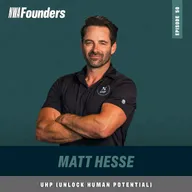
Matt Hesse, UHP
Cameron Clark and Nick Beyer talk with Matt Hesse of UHP in Gentry, Arkansas.
In this milestone 50th episode of the Northwest Arkansas Founders Podcast, host Cameron Clark rides around the UHP (Unlock Human Potential) campus with founder Matt Hesse, a former Army veteran and serial entrepreneur who has dedicated his life to solving the veteran transition crisis. After selling his sports nutrition company, Hesse invested heavily in veteran suicide research and discovered that loss of purpose, not combat trauma, is the primary driver of veteran suffering. In just four years, he has transformed 800 acres of raw Arkansas farmland into a $40+ million campus that trains veterans in human performance, industrial trades, and entrepreneurship, with a goal of serving 1,500 veterans per month by 2031.
Chapters
- Hesse describes UHP as combining "Disneyland, Fort Bragg, and the University of Arkansas" into one campus4:30
- The devastating statistic: 7,300 combat deaths vs. 200,000 veteran suicides over 20 years of the Global War on Terror6:10
- Hesse identifies loss of purpose and identity, not combat trauma, as the primary driver of veteran suffering, explaining why UHP focuses on prevention over treatment8:08
- The transformation story of Mike Gerardo, a Marine who overcame injury, addiction, homelessness, and parole to become a mental health counselor serving veterans50:15
- Hesse unveils plans for a franchise model where veterans graduate from UHP and own a business with zero debt and no capital of their own, making up to $150,000 in under a year59:20
Key takeaways
- Prevention beats treatment. The veteran support ecosystem is heavily weighted toward treating suffering after it happens, therapy, retreats, and symptom management. Hesse argues that the most effective approach is upstream: replacing the sense of purpose veterans lose when they leave the military, before suffering ever takes root.
- Mission-driven businesses attract extraordinary partners. UHP built the only federally-funded, veteran-only school in the country, navigating legislation that wasn't designed for this model, and in doing so attracted Fortune 1 partners (Walmart), defense giants (Raytheon, Lockheed Martin), tech leaders (Google, Apple), and state-level support. When the mission is authentic, resources follow.
- Northwest Arkansas is becoming a national case study. Hesse's decision to build UHP in Bentonville wasn't transactional, it was driven by the quality of people, servant-leadership culture, and the Walton family legacy of investing in community. He believes that in a few years, the region will be studied as a "one of one" example of what happens when values-driven leadership, corporate investment, and entrepreneurial grit converge in one place.
Show notes
What makes UHP unique is its preventative approach: rather than treating the symptoms of veteran suffering through therapy and retreats, Hesse's team rebuilds purpose by helping veterans identify what they're passionate about, skilled at, believe in, and value, then channels them into thriving careers. The campus has become a magnet for major partners including Walmart, Google, NASCAR, Raytheon, and Apple, all drawn to Hesse's mission-driven model. The episode weaves together the personal story behind UHP's founding, the business case for investing in veteran talent, and Hesse's broader vision for making Northwest Arkansas a national case study in community-building.
Key Moments
- 4:30, Hesse describes UHP as combining "Disneyland, Fort Bragg, and the University of Arkansas" into one campus
- 6:10, The devastating statistic: 7,300 combat deaths vs. 200,000 veteran suicides over 20 years of the Global War on Terror
- 8:08, Hesse identifies loss of purpose and identity, not combat trauma, as the primary driver of veteran suffering, explaining why UHP focuses on prevention over treatment
- 50:15, The transformation story of Mike Gerardo, a Marine who overcame injury, addiction, homelessness, and parole to become a mental health counselor serving veterans
- 59:20, Hesse unveils plans for a franchise model where veterans graduate from UHP and own a business with zero debt and no capital of their own, making up to $150,000 in under a year
Transcript
Read the full transcript (11,914 words)
Looking for something across every episode? Search all the transcripts.
Skip past the transcriptTake Disneyland and Fort Bragg and the University of Arkansas and put them all into one thing Okay And that's basically what UHP is The primary suffering is loss of purpose. We need to focus on transition. But what I'm trying to do is when a veteran gets here, to feel special, like, "This is built for me."
Yeah. Like, "This is you built... I get to come here?"
We wanna give a special thanks to our presenting sponsor, Greenwood Gearhart. Starting with my parents, for years they've helped my family feel at peace by having a team we can trust build our finances for the future. One thing I love about Greenwood Gearhart is how directly involved the team is in the holistic planning of our finances.
We can regularly check in with our advisor and know they see the full picture of our family, even between generations. I know they're adding immense value to so many lives here in Northwest Arkansas. And to learn more about Greenwood Gearhart and their suite of services, you can visit their
website at greenwoodgearhart.com or hit the link in the show description.
The Northwest Arkansas Founders Podcast is supported by Cushman & Wakefield Sage Partners. Sage is a full-service commercial real estate firm helping companies, investors, and developers grow across Arkansas. I've personally seen them add immense value to so many business owners across the Northwest Arkansas market.
From office and industrial to retail and land, Sage helps businesses find the right space to grow in the state's most dynamic market. Learn more at sagepartners.com. This is our 50th episode of the Northwest Arkansas Founders Podcast. We ride around with Matt Hesse at UHP, or Unlock Human Potential. He tells us all about the work they're doing for veterans right here in Northwest Arkansas, all across the country.
Let's dive into the episode.
So I'll give you a pretty good, uh, um, overview of all the things that we do at UHP, and, and how we serve veterans, and, and now the companies that we partner with to provide talent from the veteran population to go into them. And, um, and then you- we'll sit down, and you can cut it all up however you want.
No, thanks for doing this.
What was... So is all
the infrastructure laid, or you still have more infrastructure work to do kind of along the way? Um, so when we got here, it, it was, uh... We f- we first bought about 450 acres, and it was just raw land. Yeah. There was really nothing here other than a couple of barns and, and a little bit of, um, uh, fencing.
Uh, there was one well and, um, single-phase power, uh, from a utilities perspective. So, uh, we've had to bring three-phase power to the campus. We've had to drill more wells, put in all the septic systems. Um, so what, what you see here today is about $40 million of infrastructure.
-: Wow.
Um, and this site, uh, we believe, we, we now have 800 acres.
We believe this site will take us somewhere into the 1,500 veterans a month range, uh, through the programs. Um, so to get it into completion in that respect, in t- number of beds and facilities needed, uh, we
probably need to spend another 60 to 70 million to get it to that, to that scale.
Commercial.
And a- a- all of that, um- The, the drive behind all of that is the, the mission that we are on to serve veterans and to teach them how to become, uh, how to get themselves into thriving careers after the military is a preventative strategy so that the men and women who serve our country don't suffer when they get out of the military.
Because finding a new mission, um, is really hard. Uh, when you're part of something as great as the American military and the, the platform it gives you to serve people, it's, it's really hard to replace that, um, with, you know, a job somewhere. And plugging into a career, uh, that's defined and built specifically for you is what we're trying to do here is, is build the infrastructure that gives us that, that platform.
Now, so those, the, the series of, they
look like little homes back there that we passed. Th- Are, are those Was that housing back there first?
Hey, guys. Um, those are... Yeah, those are barracks buildings for s- students where they sleep.
Okay.
And I'll take you in there and show you kinda how-
Yeah ...
uh, we're approaching.
The way to think about this place is take a, um, uh, take Disneyland and Fort Bragg, uh, and the University of Arkansas and put them all into one thing.
Okay.
And that's basically what UHP is. Um, so we'll stop here and jump out and just kind of give you an overview.
You talked about a moment when you bought this place.
It was like bald eagles were coming in. I mean, it was just like- Yeah ... w- were you standing up here or what was the...
How did- No, I w- when... I was living in New York. So, um, just a little bit of background. I spent six years in the Army, got out, went to s- uh, school, studied nutrition, used my GI Bill to go to
Hesse describes UHP as combining "Disneyland, Fort Bragg, and the University of Arkansas" into one campus4:30
school.
While I was in school, started working at GNC stores, and found the same thing in a different way that I found in the military, which is a platform to help people. Mm. So I, I didn't sell people things. I had c- I'd consult with them and ask them what they're trying to achieve, and that could be physical achievement.
It could be emotional achievement. It could be anything. Yeah. And some of the background from the military and my time, um, as, uh, a store operator and eventually the GNC's largest franchisee, all that learning is morphed into this place. But what I really think was significant about that time for me was the connectivity I had in helping people.
Um, uh, so I did that for about s- eight years, franchising GNCs around Kansas, Oklahoma, and Colorado, and then I sold those, uh, moved to New York City and started a sports nutrition company, which I built, um, for about nine years. When I sold that, um, company, uh, to a fund, uh, uh, John Cena and I both put about a million dollars
into studying, uh, veteran suicide research, um, kind of what is causing the veteran epidemic of, uh, suffering.
Um, and to give you a little framework on what that suffering is- In the 20 years we were in war in the Global War on Terror, uh, the GWOT, our, uh, combat losses are somewhere around 7,300. Um, in that same period of time, 200,000 veterans have killed themselves. So 7,000 combat deaths, 200,000 suicides. Um, and while UHP is not a suicide prevention or treatment organization, what we've done is identify the two drivers of suicide ideation, uh, what causes veterans to head down that path through that research.
And those two things were, one, that loss of purpose, um, is the primary driver. Loss of purpose and identity, um, is a primary driver of suffering in the veteran community. And two, um, a lot of kids that we recruit into the military come from backgrounds where they had trauma in their
The devastating statistic: 7,300 combat deaths vs. 200,000 veteran suicides over 20 years of the Global War on Terror6:10
childhoods, which made them want to serve other people so they didn't suffer.
And when you take those two things and you put them together, what you have is a population of people who want to help other people because they don't want them to feel like they felt. And so, um, what do you do with that data? Um, we decided that if you wanna s- if you wanna solve the problem of suicide, you have to go upstream into the prevention of it ever, of, of ever getting there in the first place.
Yeah. And as a whole, what's happening in the United States is we've pivoted really well from Vietnam, which was terrible for veterans coming back. Now we're, I would say in some ways, overly supporting veterans, if you could even do that, but I'll tell you why I think that in a second. Um, and now there are resources everywhere for veterans, which is awesome.
I mean, and they, they deserve that. However, most of the resources are, are, are allocated to treating the symptoms of suffering And
therapy
It's therapy and, and go away on a pony ride and, and go fishing, which are all great
things Yeah. But they don't heal. What heals is the prevention, which is if the biggest driver to veteran suffering is loss of purpose- Yeah
then we need to replace purpose. And how do you do that? Um, that's what UHP was built to do. So at the heart of what we do here is we help veterans understand what they're passionate about, uh, what they're skilled at, what they believe in, and what they value. Uh, and that makes up the center of our logo, those four dimensions.
Um, and so, uh, articulation of that for, let's say, an infantryman, um, getting out of the military, say they serve 10 years, and they're doing an assessment on, on what they should do next. And as they write in their, what's called a blueprinting process that they go through, um, as they're writing that blueprinting process, if it says, "Well, I'm really passionate, I'm most passionate about, about working out.
I love to work out. I always have. It makes me feel good mentally, keeps me in shape physically. Um, and I'm really skilled as a leader, as a, um... I'm really good at organizing and, and scheduling, and, uh, I'm
Hesse identifies loss of purpose and identity, not combat trauma, as the primary driver of veteran suffering, explaining why UHP focuses on prevention over treatment8:08
good at leading people. I believe my, my purpose on this earth is to help people change their lives and be better, um, and to make people better.
And my values are trust and accountability and, um, courage and empathy and, um, honesty," let's say. Well, then you might say, based on all those things, you're empathetic, you're an empathetic leader from a values perspective. You're passionate about helping people. You're skilled at, at, at training and teaching, um, and you believe you're here to change the world.
You should be a coach. Yeah. And further to that, because you have such great leadership and, and, and experience and skill in management of a lot of people, we think you're actually a potential being a business owner, and you could own your own- Sure ... gym.
Yeah.
So what do you do with that? Well, then you send them into our human performance school, and they learn to be a coach.
We teach them how to be a coach, how to leverage their desire to help people, how to build a business around it, how to market themselves. Um, and later this year, we'll
launch an entrepreneurship school to teach them how to go into business, and that'll include funding from us to them to start their business.
We'll keep, well, we, we- Yeah, we can- Can keep, keep diving into that more. G- give us the, where are we at? What's going on?
So, um, so UHP is, is we've, we've put together about 780 acres. Um, and essentially from the top of that hill over there, all the way to that, as far as you can see that way, and then up behind us, um, is 800 acres.
Okay. And, um, this was a cattle ranch. The Simmons family owned it, um, for a very long time. When Sally Simmons, um, I believe she's Mark Simmons', um, either aunt or sister, uh, when she passed, um, she willed it/sold it, um, to a, a ranch hand, um, who had been running her property for a long time named Randy Thompson.
Randy's son was also in the Army, and I'm... He's a very close friend of mine. Um, a little funny story about, about or a little bit of a spiritual, um,
intervention in, in acquiring this property. I was living in New York, um, and my real estate broker found this property, and he sent it to me. We'd been looking for six months.
Um, and because I'd done all of our, our pilot work at Alice Walton's campus, Camp War Eagle, I wanted something rural, not too far from the airport, that had water and plenty of land to build. And he said, "I think I found it," and he sent it to me. He sent a video, and I said, "Man, that looks perfect. Do I need to come now?"
And he said, "It's been on the market six months." Um, it was during COVID, and he said, "Nah, I think you're fine. Come in a couple weeks and, and we'll take a look at it." Woke up middle of the night in a cold sweat and instantly in my mind, I was like, "I need to buy that property immediately." And so I... That morning, I typed an offer, sent it in, got it under escrow that afternoon.
The next day, they got an offer for about 200,000 more. Um- Wow. So, um, you know, I, and I can probably give you 20 examples of divine
intervention or, or, um, what I would call the Holy Spirit working through this place. It just shows up over and over and over in, uh, not just the resources and the people that wanna help make this thing successful, but the students and the journey that they have.
And, and we're not a religious organization at all. Many of our staff, including me, have a high spirituality in, in their life and, and, um, of different dimensions. Um, but, uh, we've probably baptized, um... Our coaches, not the school itself, has probably baptized I don't know, close to 100 people in that river down there.
Um, and, uh, and I'm a big believer in, in, in not pushing religion on people and letting people find their, their own path and whatever that path may be. Um, but if this is the place of healing and we-- I, I really believe that having an, a, a, uh... I mean, I think this is why veterans feel so lost. Having a higher power of some sort to attach your life to,
um, and to, to lean on when things get hard is a really important component to human beings.
Um, for me, that's, that's God and Christianity, but for many other people, it's not. And what happens here is veterans who don't have that relationship of spirituality of any kind, they see the effect of having it and what it does in their life, and I believe that's one of the big things that happens here for a lot of veterans is they, is they find, um, something to believe in that's bigger than themselves.
All right.
Yep. Yeah, any- anything else we wanna kind of notate as far as, like, how the layout's set up while we're up here?
Uh, I mean, this is not... Th- so what you see down here is, is temporary programming. Um, that tractor barn was here when we bought the property. This is the undeveloped side of campus. Um, but this part of the campus will be de- will start being developed in about 18 months.
Uh, this hill is called Motivation Mountain, and it will get our corporate headquarters on it, which is a 40,000 square foot, two-story building with a, an infinity pool out the
front. Down there, uh, where those lakes are being dug, there's gonna be five lakes combined with walking trails and, uh, apple orchards.
Um, and then on the back side behind that is where all of the barracks buildings for, uh, the expansion will go. Um, so-
And who's designed all this for you?
Uh, I, I have a very big hand in design. Um, I spent a lot, a lot of time building brands, and I believe that the identity of a product or a service is so critical.
Um, and so I spend a lot of time thinking through, uh, color palettes and design features. Um, our architects, uh, are out of New York, called Workshop APD. Mm-hmm. Um, they're a very, very good design firm. And, uh, but I use local firms, and then Crossland Construction builds it all.
Okay.
All right, next stop.
So more barracks up here? So these cabins up here are called, um, outposts and,
um, when we first started doing, uh, w- when I bought, first bought the property, um, it took us about three years t- to get our federal funding in place. Uh, and that really was, like, the whole thesis of the f- of the business, was to build, um, a, a school that was federally funded so that veterans could use a small percentage of their GI Bill benefits to come here- Mm-hmm
transition, upskill, and then either decide to go into career or go into a traditional higher ed. Um, unfortunately, the process to get approved through the federal government was really tough. Mm-hmm. And so we had to generate income somehow. Yep. Um, I, I teach a class on entrepreneurship a lot, and I tell the veterans, "You know, entrepreneurship's not linear.
You're gonna have to find a way to pivot and win sometimes," and we did that. Um, all my staff at that time, the majority of all of us were m- ex-military, mostly Special Operations backgrounds, so we started doing leadership work. And, um, we got the Toronto Blue Jays to
come down here, um, and that was what kicked it off.
And then we started doing work for Walmart. Okay. Um, and we've done work for the CEO all the way down through the COO, down in- into the merchandising teams. Um, that turned into work with Google, NASCAR, and now, um, we have a division, uh, run by Sean Murphy, who grew up in Bentonville. Uh, his dad worked at Walmart.
Hmm. Sean, um, uh, spent 20 years in the SEAL teams and 12 of it at SEAL Team Six, and so- Wow ... he runs all of that programming- Okay ... for us. And, and, uh, we're, we do basically bring companies and teams for two to three-day immersive experiences and teaching them how to be b- work, work on team readiness and, and performance.
And, and, uh, how unique is it now that you've got the federal funding, like, for a program like this?
Um, well, we're the only school in the country that has, uh, federal funding for a veteran-only, only school. Nobody else is doing this. Um, and, uh, you know- Why is
that?
Because it's really hard.
Um, the legislation is not set up for this type of environment.
Thankfully, there are a lot of companies out there that have a big heart for veterans and, um, what we've been able to do is when veterans don't have education benefits, um, uh, we can tap those companies to help support them to go to the school. We're not allowed to give education away. Um, and the school, by law, can't just serve veterans, um, from a funding perspective.
It can serve just veterans, but if you only serve veterans and you can't only have federal revenue to be a- allowed to be a school, you have to have revenue come from somewhere else. Right. And so that's where we tap partners like Walmart, uh, um, uh, Pure Life Water. This, this company has put probably- 3 million veteran, 3 million, uh, dollars behind veteran education for us.
Wow. Um, and, uh, you know, I think the... So the challenge, there's numerous challenges of doing something like this. I didn't do this to get into business to make money. I did this
because my brothers and sisters were killing themselves, and I didn't wanna ignore it. Um, and I think that's the, one of the things I will, I also teach in entrepreneurship classes, if you follow your heart and do the things that you're called to do, you, you can find a way to make them, um, make sense from a business perspective.
And then you're doing the things you love, and you're earning an, an income and making an impact. Like, that's, that should be what every human wants. Um, so, um, uh, definitely very hard to do, but now four years on the side of it, very worth it.
You wanna check out the inside of these?
All right. Uh, so our entire campus is key card access.
Um, all these have RFIDs in them. Um, we brought the chief, uh, product, which is chief technology officer from Walmart here, and our entire campus is, um, technologically driven through AI cameras and security systems. And so now, um, you know, we've got almost 200
veterans on the ground here. We need to know where they are at all times.
Yeah. Um, and this allows us to do that.
And the program's three weeks long?
Um, depending on the program, so they're between three and five weeks. Our human performance school has personal trainers, health coaches, and nutritionists. Mm-hmm. Those are three-week programs. They train for 10 hours a day times three weeks.
Um, so they get about 160, 70 hours of education while they're here. The industrial trade school has, um, we'll call, uh, five weeks of education. Okay. And, um, that is 220 to 260 hours, depending on the course, and that is plumbers, electricians, welders, HVAC technicians, facility technicians. Um, and essentially what we're doing is teaching them to work in a trade and then, uh, aligning their path into, into industry based on the company's mission, culture, and values,
matching the veteran's desire for specific cultures and missions.
Oh, okay.
So three weeks and five weeks, depending on the school.
Okay.
Uh, so these are operation posts, or outposts. Um, they're two-bedroom cabins. Uh, when we have executive teams out here, uh, we want, uh, them to be able to stay in something nice. The irony is, um, if you have a Walmart team out here, the, even the Walmart CEO will say, "No, we'll sleep in the barracks."
Um, so, which are not as nice. Yeah. But we use these a lot for, for special guests that are here and, and, um- Okay ... and I even bring my kids out here sometimes to sleep in them. They're really awesome.
Yeah. I bet they love that.
Yeah.
So this is our culinary school. We'll have l- we'll have lunch there in a few minutes, and that is our greenhouse. Um Who, is there someone locally that heads up the culinary school? Um- Uh, it's a combination. It's a nutritionist, a
chef, and a farmer. So they're teaching the students how to plant food-
Full life cycle
farm food, cook food. Yep, exactly
How many people total can you h- house currently on
site? Uh, currently, uh, 180 So these buildings were built first. When I first launched this, it was these four buildings and that training facility and nothing else, um, other than the homestead house that the Simmons family, uh, lived in in the '40s, I think.
Yeah. Um, we, we turned that into a commercial kitchen. Um, and we fed them for the first year out of Brightwaters food truck. Okay. And they'd sit... They'd go get food outside and go sit inside. Then we modified that building to be a, an actual kitchen. Um, and until we hit about 40 students a month, which then we grew out of it.
We
built the Pure Life Culinary Center about, mm, it finished about a year and a half ago. Mm-hmm. And now we can do about 400 meals three times a day out of there. Um, so we'll complete this series of buildings here. The Crosslands building the last one right now, and then that'll take us to, uh, 220 beds, and then we will start the next series, um, which we call Barracks 3-0, and they will be, um, 200 people per building, uh, about 20,000 square feet.
Okay. And all this has been built in the last six years?
No, the last four years. Golly.
People don't realize how hard it is to make development move fast.
Yes, sir. It's
like...
Anybody in here? Come on in. Uh, these are barracks. There's students staying here, so, um, they're obviously being used. But, so these are our new pod beds.
Um, so they are enclosed. Uh, you can ch- you can pull a curtain across, um, and they have ventilation and
lights. And we put these in because every student gets a wearable, so we, we measure sleep and stress, and we can see that sleep quality is low. And that is because we believe people are getting up in the middle of the night and you- lights are on, and you can't sleep because you're hearing things- Yeah
seeing things. So we don't want disruptive sleep because sleep is one of the most important factors of health and wellness. So we've now, um, we, we created these ourselves. We designed them and had them built locally. Um, we're testing out... We have 50 of them today out of the 200 beds, and we have 50 people in these and 150 people in the other beds.
Um- And you can
monitor sleep on
both sides. And we're basically looking at the difference between the two. I'll show you the other bunks now.
Okay.
So this is what everybody else sleeps in.
Okay.
So they work fine, but not near as comfortable. Um, and, uh, the, the jig is up 'cause people in these buildings have seen that other people have nicer bunks and
they're like, "Hey, I want those." So I, I think we'll have to move to this new, this new style. Um, but we'll see where we shake out.
What's the average age of a veteran in the program?
Um, average age of a veteran in the program is 28, I believe. Um, but we have veterans that are as young as 20, and active duty folks as well. Uh, and we even had a Vietnam vet about two years ago, so.
Wow. Wow.
Yeah. The goal, the goal is to get them before they get out of the military because if you can, if you can get them before they transition and teach them to build a, a good transition program, then the downstream effect that we hear about in, in the veteran population is, is prevented.
Yeah. One of the biggest-
High potential for impact that-
Yeah, exactly ... I was gonna say. Yeah. One of the biggest things I'm trying to educate people on is veterans are not messed up from combat trauma. Um, certainly there are veterans that are, that have challenges because of combat trauma. The primary suffering is
loss of purpose.
Mm-hmm. So i- if we can, if we can educate society and the government and the, the legislators that run the government that w- we need to focus on transition, and then the downstream effects that cost the country so much money, and worse, cost lives, they will start to go away because you transitioned them well.
You get people proud of what they do and, like, and proud- Yeah ... of, like, being a good dad or- Yeah ... uh, husband, wife. Yeah.
2030 is the goal on, to have everything mostly built out? Um, 2030 is the 10-year goal... Oh, for this campus? Yeah. Yeah. I would say th- this campus will be matured fully by 2031, and that means 1,400 students on campus at a time about.
Um, there's just a lot of construction that has to be built to get us
there. And it's not just construction, it's hiring the staff and, and- Sure.
Yeah ...
you know, in, in some cases, developing the staff. We hire a lot of people that come through our program, go out in the world, get a couple years' experience, and then come, uh, and then come here after.
Yeah, for the ones that wanna stay and work here, do you ask them to try to do something else first?
Um, there's certain special folks who we see are, like, excellent and we'll grab them before. We may, may not get them back if we don't.
Yeah.
So you have our training facility here. In the morning, we have 150 people in here working out.
It's very similar to the military, where we're bringing them in for conditioning in the mornings. They're working out. Um, this place in the morning is rocking with, with a lot of veterans and a lot of excitement, and music's on, and, and it's, it's pretty awesome. Come this way, I'll show you.
How often do you work out in here?
Um, I'm probably here
once a week maybe. I try, if I have a meeting on campus in the morning, I'll get here early and work out with the students In here we have saunas, cold plunges. Um, we have fi- four different temperatures of cold plunges, two different kinds of saunas.
Um, one of the most interesting stats here is we do body fat analysis on every student when they get here. Um, and the average fat loss, um, body fat loss in three weeks is 2.8 pounds of fat loss and about 2.2 pounds of muscle gain. So you're seeing like a five-pound conversion in three weeks. Wow. Um, and that's what's possible when you exercise and eat right, um, and y- and you're active.
Yeah. So, um, you know, that, that data is across thousands of students, so-
Yeah ...
pretty, pretty strong s- data set.
Yeah.
Yeah.
I mean, our coaches are modifying training based on, uh, stress levels. So we can see, we have a platform, we built the tech, um, our own software.
We can see, uh, when the students are in the average in red, for example. And if you're in red, that means that your body is having a hard time adapting to stress. Mm. So then we'll pull things back a little bit. Yeah. Or if everybody's in the green, we might apply pressure.
Yeah.
And that both helps them regulate, but then also teaches them how to help their clients regulate.
Mm.
Now, I don't have any hard hats with me, but I think we can walk on the edge and be all right. So what you're standing inside now is this building. Oh. Um, and it is, uh, the Human Performance Education Center. This will open on Veterans Day this year, and it will... In here, uh, it will seat about 300 in, in various places, and then we've got about 220 seats in
classrooms.
So we'll now have, um, you know, a really well-run, uh, classroom space. It has all the technologies, and, uh, there'll be a floor-to-ceiling olive tree being, that's being imported right now from Europe, uh, right here that you can sit around. It's, it's all the way to the ceiling.
Why, why olive trees?
Uh, they're just...
You know, I wanna bring, like, a piece of outside in. You know, like, I love the... I love how this, these buildings are connecting with the campus, and the kind of the buildings and the grounds are sort of built together. Yeah. So bringing things from the outside in. Um, I also just love... I, I was in Italy about, uh, two years ago touring wine vineyards, and, um, they all have beautiful olive trees.
Yeah. Massive 100-year-old trees. Um, so I wanted to bring something living into the campus. Um, and then out there is where the turf field goes.
So is the, this, the purpose of this room is predominantly large format classroom?
Yes. Yep. Um, but you have up here, up here you have, uh, conference rooms and breakout rooms-
So you see it'll, it'll look over the field here Yeah
How you guys doing? Good. Um, so that field will be right there
And what all will you use the field for?
Um, outdoor training, uh, events, um, and then that lake right there, um, which is all the way around the lake, uh, different things are being built. So, um,
this is our learning labs for the trade schools. Um, so you see you have our partner buildings like Walmart- Mm-hmm
um, Raytheon, Lockheed Martin, Salute Data Centers. Um, those are all the labs where they'll learn those trades. Mm-hmm. And then when they finish the trade they're gonna learn, let's say they're gonna become an electrician, and then they go to what's called finishing school, and that is Raytheon's Pratt & Whitney Finishing School.
Mm-hmm. So they would go, they spend four weeks, five weeks in the trade, and go across campus for one week, and they'd learn the mission, culture, and values of- Of the organization ... of Raytheon. Mm-hmm. Um, and potentially how to, like, solder a Pratt & Whitney engine, for example. Wow. So technical capabilities and kind of the soft understanding of the culture they're gonna go into.
And then across there we see the mound built up. That is our new education center, which will look like that.
Oh my gosh.
Um-
That is gorgeous.
Yeah. And that building, uh, we'll start construction in about
six months is my guess.
And n- now, I mean, I know you kind of did it all, a lot of the initial funding.
Are you still pushing a lot of that or is this, is it starting to, I mean, through these different companies that are, you know, part- partners if you call them, is that where a lot of the funding's coming from now?
Yeah. Um, it's still, still very much a if you build it, it will come. But we're over the hump, you know?
Like in the beginning it was me and my wife putting a lo- most of our family's capital into- Mm ... getting the campus established and getting it to a place where it could hold the kind of scale we're talking about. Yeah. And you couldn't really halfway do it. You had to kind of go all in. Um, and so in those early days, um, you know, I found my spiritual journey here because it was so damn hard.
Um, I tell the students all the time that that, that river down there is, is, is, half of it's my tears from being just at a, at an end of like, "I don't know what I'm gonna do," because I put everything I have into this place. Um, and
I didn't ever have to work again after I sold my last business. But- Yeah ... you know, I think entrepreneurialism is, is such a powerful engine.
And for those that are willing to like stay in it and grit through things, um, uh, and have the perseverance, you'll get there eventually if you just don't quit. And I think most entrepreneurs who fail, it's not a, it's not that they couldn't have made it, it's that they quit. Right. And so when I talk about entrepreneurship a lot with our veterans especially, I tell them that the first step is just taking the step and then, um, and then not stopping.
Mm. If you quit, um, you're gonna get against hard things, but if you quit when you're against the hard things you'll never succeed. Yeah. But if you just keep going and you, and you pivot around until you find a way to win, then eventually you'll get where you wanna go. And when you do that, then, then the resiliency you've built up in yourself, that's contagious.
You can, you'll attract great people with that, and you'll also teach other people how to have that same resiliency when they go out into the world.
Yeah. Yeah. So how much...
I know you said you're involved in the design a lot. The, sh- this building for example, how much like were you directly involved with how it's laid out?
Every aspect.
Okay.
Yeah. I work really well and synergistically with my architects. I'll, I will paint a vision for them of what I want. Um, and then they'll go and do a first round design. I'll take a look at it. Um, I'll send back feedback. Uh, they'll modify it and send it in again, and just keep doing that until we get the perfect product.
Yep. And I'm even known for, for a building at this stage to say, "No, no, no, we're gonna change it, and we're putting in this new thing." And, um, I, I, I change things sometimes. Uh, this field is an example of that. It... This field was not... Probably aren't supposed to walk under that is my guess. Um, this field was not part of the original program, but when I was standing out there thinking about, like, what we're gonna do right there, I was like, "Why not do a really cool outdoor field?"
Yeah, green space.
Which then turned
into, "Well, we gotta put in foundations and connect it to the building." And so a million dollars later, here we are.
Yeah. Yeah.
But it's those little refinements, I think, that totally change things.
Yeah. Yeah. Make the whole experience- Yeah ... the little, the little details.
Uh, so right now we have 160 veterans on the campus.
Um, and serving those veterans are about 90 staff out here. Okay. Um, and then we also have, um, uh, the CFAC out here, which is the, the Children's Advocacy Center. Um, so we, we give away or, uh, philanthropically give space on the campus. Um- Oh, that's amazing ... and we facilitate training. So, um, I went to a CFAC event, and, uh, the Child Advocacy Center in Bentonville does essentially displaced mother and children who are victims of, of abuse.
Mm-hmm. Um, they take care of them. And I went to an event and, and, um, you know, was moved by that. I was a kid that had a really shitty childhood, and I know
what it feels like to be displaced. And so- Mm ... um, Tim Simmons, our COO, uh, who was a executive at Walmart prior to coming here, he's on their board and, and, uh, he suggested that we, we, um, do some work for them and, and leadership work and give them a retreat out here.
And so last night they had dinner here, um, and sat down by the river and, and had dinner cooked for them. Um, had a, a camp- a campfire singalong type deal. Oh, cool. And then, um, and today they're in training with our Navy SEAL, uh, head of performance. So, um, you know, when, when... I believe when you are given gifts like this place, you gotta share them with other people and- Yeah
and in whatever ways you can. That's our job. So doing things like that is awesome.
And I think you'd mentioned to me, I don't know if it's a s- secret or not, but the... On some of those corporate trainings, just t- taking them to do something, maybe it's a little more intense team bonding, like rappelling or doing things like-
Yeah, we
have,
we have helicopters here and-
Yeah
Airsoft battles and, um, we, we love doing that kind of stuff. Any- anything that gets our guys that, like I said, mostly came out of the special operations space doing operator fun stuff.
Yeah, things they
probably love. Yeah. We, we dig it. It's a good s- good time.
So I think one of the things that'll happen with this lake, um, as the water fills up now that we have the- the foundation up, um, I think the graduation photos will be taken from this side and everybody jumping off into the lake. Oh, man. It'll be pretty- pretty cool.
So what do you love most about Bentonville?
Uh, what do I
love most- Aside, aside from everything- ... about Bentonville? ... you have here, the grounds.
Hmm, good question. Um, I think I, what I love most about Bentonville is the culture and the people. Um, you know, there, certainly we don't have the things that big cities have, although the, some of those things are coming.
But what you have is a, a population of high quality, values driven, uh, in many cases, servant leaders who, um, who are proud of their community and wanna make it better. And, um, that's probably at the core of like the, what I, why I think all the great things that happen in Bentonville happen. I have a huge amount of respect for, for the Walton family and the way that they've invested in this community and, you know, they could have easily taken this to a big city and gotten all the incentives to build their new campus.
And, um, but the legacy that, that Sam started here,
uh, it's gonna grow far beyond just Walmart because the, um, the heirs to the, to that creation have continued the spirit of why he built that in the first place here. And so I think, um, you know, I'm an example of somebody who came here working with Walmart when I was, when they were a customer of mine, who then decided to move here and build something here, not because of Walmart.
Um, you know, I, the, while we do business with Walmart now, it was never part of the original plan. It wasn't like, "I'm gonna move to Bentonville and get contracts with Walmart."
Yeah.
Was never part of the, even any of it.
Thought process. Yeah. Sure.
What happened to me was, I'm a servant leader who came from a background, um, where, where I can recognize good people, and I want them in my life, and I was attracted to the quality of people in this area.
Um, and then when you combine that with all the exciting things that are
happening here, some of them being Walmart and some not, like, who wouldn't wanna live here? I mean, the secret's out now. I think people are starting to move here very fast, so, um-
Yeah. I think be- you know, I grew up here, so I think being from here, I think it's, it's even more meaningful to me to see someone like you, you know, pick here over, uh, Atlanta or a Dallas or, you know, if you're thinking of coming somewhere around this area, it's just, it's, uh...
I always like to hear that answer why.
I think that, that we're gonna look back in history and Bentonville is gonna be a case study. Um, I, I tell my kids all the time, like, "This is a one of one- Yeah ... experience in the world. Nothing like this is happening anywhere else, and we get to be a part of it. We get to be a part of building it."
I think that's awesome.
We're gonna wear
-: hard hats in our meeting? Yeah.
Okay. So we've walked around a lot. Um, where are we now, Matt?
So we are sitting in
the School of Industrial Trades. Um, tagline is Ignite America. And about a year ago, um, maybe a little bit more now, um, I was having a discussion with the governor about our workforce challenges in Arkansas, and, um, the immense amount of people moving here and the development that has to be facilitated for the, for that population growth to happen.
-: Mm.
Um, uh, as I came out of those discussions, I started doing research on just kind of the national issue. Um, over the last six months, it's become a big conversation. You're hearing all these companies like Google and Meta and, uh, Caterpillar all putting f- uh, half a billion dollars into skilled trades.
Um, but before that happened, um, uh, we were talking about this issue. And what I realized in the data is that we have, for every five electricians in the United
States that retire, only two new ones are coming in. And so we've got a attrition problem through retirement and a pipeline problem through education.
-: Mm.
And a, a lot of what caused that is the What I'll say the focus on higher education in, in the traditional sense and the de-emphasis or even maybe the downbrow look on the indus- on the skilled trade space.
-: Mm.
And what's happening now, which is the ironic, is you, you can go to a four-year college, graduate, and have a tough time making $50,000 a year-
-: Mm-hmm
And you can go to a trade school, uh, to be an electrician, and in this school finish in six weeks and be making straight out of this school $80,000. Yeah, that's crazy. And within a couple of years, 200. Mm. And we have tracks like that f- with our partners. And so, um, after the discussion with the governor and doing some research, I decided to move us into that
space.
Mm. And, um, you know, one of the things that we talked about, about entrep- entrepreneurship that I think is very real is when you are forced to take a pivot and maybe widen your per- your perspective on your business because things aren't working, so widen your field of view- Mm ... step back and try to look at things differently, it creates opportunities.
Um, and one of the opportunities that was created here by doing that leadership work that we had to do to stay alive in the early days- Mm-hmm ... um, we, we were fortunate enough to do the CEO of Walmart's work, and through that work we met a lot of the executives that run different divisions of Walmart. So after the conversation with the governor, um, and doing that research work, and then, um, s- talking to folks at Walmart in, in the facilities technician space specifically, um, an executive who I have immense amount of respect for named RJ Zanes at, uh, Walmart, um, uh, we decided to launch into the electrical
space first, and Walmart jumped right in and partnered with us.
And so we have a contract with Walmart to produce facility technicians for them. Um, they're in the school, uh, now. We started, uh, you know- I like to s- I like to, to say this both as, um, a proud thing and also, uh, a, a little bit crazy. Mm-hmm. And that is we had the first conversation with Walmart, uh, about nine and a half months ago on that.
And in that time we built this building, built the curriculum, hired the instructors, and recruited all the students. Oh my gosh. Uh, we launched our first cohort about six and a half months after that conversation.
Oh my
goodness. Um, and they're now working at Walmart. Um, we graduated our 30th, um, student last month.
Congrats. And new- 40 new ones are coming in on Monday. So, um, the School of Industrial Trades pilot building, which is what we're sitting in, can produce about 100 students a month. Uh, the new trades that we
looked at on the screen earlier that, overlooking the, um, the skilled trades area, uh, that school can produce about 10,000 per year.
Jeez. Um, golly. My head's spinning 'cause there's so many different things and so many different directions and things that are going on here. Talk about, uh, the governor though, and then, and the state in general, how vital that's been, like, having, you know, a, call it a support part- partner from them. And I guess you can, uh, obviously include Wal- Walmart in there, but, um, how have they really, really supported what you're doing?
Yeah. Um- Industry and the state, uh, have been vital. Um, and, and honestly, the, even the brands that do work with Walmart, um, you know, consumer brands- Mm-hmm ... uh, we have hundreds of students on campus, and, and we're on well water. Pure Life Water stepped up and gave us every bit of water we've ever needed.
Mm-hmm. Millions and millions of bottles of water, and scholarships for veterans who don't have benefits to go, go here. So, uh, I can't s-
say enough about our partners. Mm-hmm. Walmart's an amazing company. We, we who live here in Bentonville all know the impact that that company has, but I've gotten a deep look under the hood of that company, uh- And it's
real.
It's very real.
Yeah.
We do leadership work for them, and, and I'm pretty s- pretty, pretty insightful. If somebody's trying to pull the wool, wool over my eyes, I can't do it very well. Yeah. And the save money, live better slogan that Walmart lives by- Mm-hmm ... I've watched executives in the C-suite in, in strategy discussions about their business, predo- predominantly leadership work-
Mm-hmm
ask the question, "Well, does that strategy help our customers save money or our associates live better?" Mm. If the answer's no, we're not doing it.
Wow.
And I just think that's so rare. I just, I don't... Companies have mission statements and values, but very few of them use it as a filter for decision-making.
Mm-hmm. And that's... I think Walmart is, is a exceptional company for that reason, and that was set in the values that Mr. Sam put into that business, um- Yeah, from day
one ...
w- from day one.
Yeah.
Um,
the state, um, our governor, I think, is an exceptional governor, the best in the country. Um, I, I, I, I want her to run for president someday.
I think she has the, the qualities of leadership that we need in this country. Um, I think we all feel that way about her. Um, uh, and as we've been, from almost day one, she's been supportive. She's here on Veterans Day almost every year. Mm-hmm. She was just here a couple, couple weeks ago for a graduation.
Um, I talk to her a lot about what's going on. She checks in with me. I check in with her. Um- That's amazing ... and, you know, I just don't think you see that from governors. Um, and, um, I'm, I, I doubt I'm the only one she does that with, but she's, she's a great leader. Um, and we're, we're working to collaborate with the state on a bunch of s- workforce initiatives that I think will help, um, fill some of these high-demand careers as well.
Yeah. Excellent. Well, let's zoom in here. I wanna hear, like, g- call it a success story of a, a
veteran. Sure. Like, um, I mean, you are so passion and mission-driven, and, uh, we've talked a lot about all the, you know, cool things that's going on here. But, like, let's just talk about some of the people.
Yeah. And
you-
Um, I've got a lot of them.
I'm gonna pick one from, from the very first cohort. Uh, so we did our initial pilot research, um, so starting to take, collect the data. Um, and it, it's, it was a different kind of program in some ways, but in a lot of ways it was similar. You know, really what we were doing is leveraging a campus, a community, uh, a c- a curriculum, um, and, uh, you know, pulling them together and, and helping them grow.
Um, we didn't have all the fancy things we have now, buildings and the kind of curriculum we have now, but the framework was there. And one of the very first veterans, um, who went through the very first res- research cohort before we even had this campus, uh, has a name,
a guy named Mike Gerardo. And Mike was a Marine in Iraq who got injured.
Um, and through his injury, he got hooked on pain pills. And, um, he popped on a drug test, um, and got kicked out of the Marines. And that led him down a path of, uh, incredible suffering, homelessness, uh, ended up in a halfway house, uh, ended up on parole. And while he was on parole, um, a, uh- A parole officer, I believe, um, we spoke to and said he could come to our program as long as, you know, we were, um, uh, able to, to support him in, in, in, in, obviously is non-incarcerated, but still on parole nature.
Mm. Um, and we said, "Yes." He came to the program, and while he was doing what's now called a blueprint readout, he
said, "I know what I wanna do. I wanna get healthy. I wanna get, uh, employed and use training as a, a way to, to make, make income 'cause I don't have a GI Bill."
Mm-hmm.
Because he- when he got arrested, he lost- That was gone
all of his benefits.
Yep.
He needed to pay for college, so he used his personal training certification to train folks to make money to go to college, and he said, "I wanna get a degree in, in, um, mental health and counseling, a master's degree, and I wanna go work at the VA and help people like me."
Fast-forward, I lose touch with him for about two years. Um, um, other people on my staff had been talking to him here and there, but I, I hadn't talked to him. I find out when I buy this property that he's at the University of Arkansas enrolled in a master's program as a mental health counselor, and he just finished his third year as a lead counselor at the Fayetteville VA, and he has moved back to
The transformation story of Mike Gerardo, a Marine who overcame injury, addiction, homelessness, and parole to become a mental health counselor serving veterans50:15
Texas to open his own mental health counseling business in, uh, Texas that he intends to build into a franchise to help other veterans help other veterans.
Wow.
So stories like... They're, they're goosebump stories. You don't-
Yeah ...
you know, they're- So my b- my view on what this place has become is just the vision has grown and, but it's even grow- outgrowing outside of me in a lot of ways. It's just... I think when you do the right thing, um, like I was saying earlier, like when you, when you don't try to make money from something, you try to do good in the world, then I believe that God's got a way of, of making sure that those types of things are successful.
Um, and, uh, now it attracts all these other partners, and we have contracts and partnerships with defense companies and Fortune One and, um, you know, the largest data center c- uh, uh, provider in the country. Um, and you know, we have a great relationship with the VA. There's just so many things that have happened here in the last
couple of years that have just given a tailwind to this place that's gonna allow it to become what it needs to be.
Has there been a lot of pressure from these... I mean, it sounds like a lot of great partnerships, but to be, you know, one thing for somebody else, be one thing for somebody else, and I, I mean, from talking to you, it sounds like you've done a really good job staying in core mission of like, "Hey, this is for veterans, and you know, we can do these other things."
But like how... What would you tell someone who's maybe struggling with something like that right now?
An entrepreneur?
Yeah.
Yeah. That's a great question, um, because that is a common theme of entrepreneurs, to go do lots of little things and instead of one big thing, and, you know, the inch wide, mile deep versus the mile wide, inch deep concept.
Mm-hmm. Um, or a bullet versus a shotgun spray. Um, listen, I think, uh, in the beginning, if you have a product or a service that is showing success and you distract yourself creating a brand-new
thing, it's likely that you're gonna get taught a lesson. Yeah. Um, and but those businesses com- uh, on the opposite end of that spectrum, those entrepreneurs who have an idea, who are trying to make that idea work and it's failing over and over and over and over, and they keep trying the same thing hoping it will change, um, at some point you have to pivot.
Not quit, pivot. Mm-hmm. And so maybe a new product or a new idea is important at that time. Um, for us, I was insanely focused on we are building a veteran education institution to serve a population of people that our country values very much, who have, who have... are having a hard time finding their way.
Mm-hmm. That is the mission. Um, how we attack that mission- Uh, and the, and the different resources and places we pull to achieve it. Um, that, that, that can change as long as that core focus doesn't change.
Okay.
Um, now people asked us, "Hey, would you tr- would you go into the civilian training space?" Um, my answer isn't no.
It's we're not gonna mix them with veterans.
Yeah.
Um, and if we do that, it's gonna be to help one of our partners. Um, you know, I love innovation, and I believe what we've innovated here for veterans works for all populations. Mm. And so, you know, as this business grows and matures, we'll never stop focusing in the core mission being on veterans, ever.
But we may generate resources from non-veteran activity to support our mission to support veterans. Um, but if we do, it'll be very intentional, non-dilutive to the core mission.
Hm. And one of the things I was... I listened to a couple other podcasts you did before in the past, and one thing you talked about was, you know, you had these two other very successful ventures that allowed you the platform or, you know, gave you the ability or whatever you call it to do here, be here what you are now, and- You talked about, you know,
starting something with passion or doing something you're good at, and then being...
the business grows so much that you're growing out of that. Yeah. And maybe one thing you're trying to fight now is, is that not to happen here, and how do you do that? How do you stay aware of that? Maybe give some insight to the past to-
Sure ...
now and the future.
Yeah, I think what you're talking about is, um, in the beginning, building something is you have a passion for it, um, and it's you're enjoying it, and then all of a sudden the business grows around you in a way that pushes you into areas of work that you don't enjoy anymore- Mm-hmm
that make you not wanna do it anymore, or you've lost your, your passion for it. Um, I don't think that will happen here, um, only because the mission itself, um, isn't going to change, and I have learned as a leader to put myself in the place of biggest impact, both economically, uh, for the business and personally from a fulfillment perspective.
Mm. Um, I love
more than anything sharing what we're doing, um, and spending time with the veterans. So I still teach classes to the veterans. Um, I ta- I teach an entrepreneurship course. I'm building an entrepreneurship program now to launch as curriculum that I'll be very involved in. Um, and I'm innovating on the platform.
We're creating, um, an entrepreneurship school that will also put funding behind veterans. So I think there's enough in the platform for me to never get bored. Um, and, uh, you know, as a CEO, though, my job is to make sure I don't overload my team with too many things and they get overwhelmed, and then the mission, it doesn't, it doesn't fulfill them anymore because they're exhausted all the time.
Sure.
Yeah.
Yeah, yeah. Um, w- ta- talk about the, one of the other, um, ways, I'll call them a launch, a launch pad that we'd talked about is, you know, you're funding, I don't know if it's franchises for these, some of these new veterans- Yeah ... um, or if it's just, uh, kinda any, any
business venture. But I, I... from what I understood, it was more specifically in the franchise realm with your background.
Yeah. So I started my career in, in business and entrepreneurship through franchising. I was, uh, a franchise at GNC. Um, I learned how to be in business, uh, from GNC, and it was an incredibly valuable, um, way for me to start. Um, and when I look at my life- Uh, there's many great things that have happened to me, but finding entrepreneurship and finding business ownership has completely changed the trajectory of my life and the tr- and the, the blast impact that I can have on the world.
Um, and UHP is, uh, I would say, like the most fertile ground for that impact. Um, so I wanna create pathways for other veterans who have the propensity to be great entrepreneurs, um, and remove some of the barriers that, that, that many of them feel. Because the reality is, if you serve 10 years in the Army or, or any branch, um, you're now going to
be 28, and you likely have a family.
And starting a business when you have a family and taking that risk, uh, doing it alone for yourself, you know, that, that is still hard, but if you fail, you gotta take care of yourself.
Yeah.
When you have kids and a, and a spouse, it makes it way harder.
Yeah.
So I'm trying to find a way to open up the platform, um, and make it easier for them to get into business so that they can thrive, create wealth- Mm-hmm
and then pay it forward the same way to someone else. And the way that we're gonna do that, um, at least in the first school, the Human Performance school, is open up gyms, uh, in communities around the country, starting with Bentonville. Mm-hmm. And we'll open a 4,000 square foot training facility there that uses the same holistic model we train them in, physical, mental, emotional, spiritual training-
Mm-hmm
uh, uh, in a, in a really
cool, high impact, uh, technologically driven format, where you have a wearable. It tells you when to work out, what to work out based on your goals- Mm-hmm ... when to cold plunge, when to sauna, uh, when to hydrate, when to take protein. Mm-hmm. So it'll be a very, very connected, um, experiential, uh, impactful, uh, tri- franchise.
And we're gonna give that location to one veteran who graduates our training school, and then we're gonna give them the capital to be able to operate it. So some OPEX and CapEx. And the idea is that over time they earn that business, uh, with no capital of their own outlaid.
Mm-hmm.
Man, that's a- You go from, you go from making 50 grand in the military to going through two courses here at UHP and owning a business with no debt, making $150,000 in less than a year.
I mean, yeah, that's almost unheard of.
Yeah, yeah.
Um, uh, so let's, let's talk about the future, kinda more, more of what's to come. You're saying
Hesse unveils plans for a franchise model where veterans graduate from UHP and own a business with zero debt and no capital of their own, making up to $150,000 in under a year59:20
by 2031, ideally, this campus is thriving, um, 1,200 veterans a month or so. It will be. Will be. Will be. Will be. Will be. That's the goal. Um, and, uh, um- Yeah, I mean, how, how do you get there?
What's... Just talk about maybe the steps that, that are gonna be leading up to that, to that mark there.
Um, I mean, the framework's already set. We have electrical school, welding school, HVAC school, um, facility technician school, uh, curriculum done, submitted. Um, and we will launch, uh, we've launched the electrical school.
We launch the welding school in about two months. Uh, so I think, you know, now it's, it's simply just scale. It's instructors, beds, mess halls, training facilities. Yeah. Uh, and so I don't, I don't see a barrier to achieving that goal. I think now my job is to
think what's next. Um, that's probably additional sites.
Uh, there's 200,000 veterans in the population. I think all of them need something like this coming out of the military. The majority of them do.
-: Mm-hmm.
So it, it's, it's likely moving into other categories. Uh, today we had a CEO of a $4 billion lawn care company asking me can we produce landscapers for them.
Hmm. And I hadn't even thought about that. Yeah. So again, back to the platform, I was like- Yeah ... "Would you consider creating a franchise for veterans to become, uh, landscapers and own their own trucks?" Yeah. It's a, it's an autonomous lawn company, basically the Tesla of lawnmowers.
Yeah.
And, and he was all about it, so now we're working down that path.
And my guess is we'll have a landscaping school here pretty shortly. So it, it's like a, it's like an innovator's utopia- Yeah ... because you can just keep creating. Um, so, you know, we'll see, we'll see
what, where we are in two or three years, but I believe we'll double our student population every year and be in that, call it, 1,200 students, uh, a month by 2020, 2030.
Okay. Uh, and how do you define success today?
Um, I mean, for me it's, it's, it's how I feel, uh, the, the impact I'm making, how big the impact I'm making is. I think young people probably define success with money. Um, people that have some miles on their car probably define it with this, how they feel doing the work, and the life it allows them to live.
I say always that we get, we get one life on the earth that we know of, and we should live it to the greatest potential possible. And if you do that and you, you strive for those things every day, then, then it's hard to be unhappy in your life. And the greatest thing is to get to a position where
you have resources to help other people do the same thing.
So success for me is how big of a blast radius am I making in other people's lives.
Mm-hmm. And why build a business in Northwest Arkansas?
I mean, it's the greatest place in the country to build a business. There is... It's a one of one community in probably ever to have the kind of things that we have here, the kind of people we have here, the resources, the support.
Um, I mean, I can't think of a better place to come raise a family and build a business than Arkansas. It's just low cost of living, uh, high potential for impact, good people to do it with. Uh, yeah, there's endless opportunity here.
That's amazing. Well, you wanna walk around a little bit more? We can-
Yeah.
Let me show you- Kind of see the- ... a little bit of how we're innovating in the trade school space, and then we'll, uh, we'll have some lunch with students.
That's great.
Um, so little bit about the trade school. This is, this is the pilot building. Um, so this is not where the trade school will, education at scale will take place. But we wanted to build a building, um, to, to run our, our classes of 40 every month to start building our muscle while the big buildings were being built, um, which complete in March.
Um, and so this building can do about 40 students at a time. Um, we have a partnership with Apple. We integrated Apple Vision Pro into the curriculum. Um, and essentially what we're able to do with these is we can VR render all of the things you need to know to be an electrician. How to bend pipes, how to pull wires, how to strip wires, how to lay out an electrical system.
If you don't know how to con- what, how to connect a, uh, a light socket together, you can say it into the thing and it'll show you in the screen. And it'll even tell you, you can put your finger on the light socket and say, "Nope, not there. Go down." So the
technology that's available, um, you know, historically, we're learning how to be electricians out of these books- Yeah
and from people who have been doing it in their craft for a long time.
Yeah.
Now, we, we pulled those type of leaders in, these people that are masters electricians, but we combine their 30 years of education and knowledge with technology, and now you're educating faster. Your retention's better. Um, your test scores are better.
Yeah. Your, uh, loss of, of, um, uh, life or injury on job sites are lower, and these have been deeply studied by like Deloitte and people like that. Sure. Yeah. Um, so, uh, when you see the trade school that will open in March, it'll be that whole back wall will be an LCD screen, full LCD, um, simulation going on all over the place, Apple integrations, uh, learning labs, um, uh, even all the way down to the floor looking like a mirror.
Like it, they are gonna be very, very high
end. Um, and when, when someone say, "Well, why would you do that?" Because the brand itself, yeah, we might be teaching electricians, but what I'm trying to do is when a veteran gets here, to feel special. Like, "This is built for me."
Yeah.
Like, this is... You built... I get to come here.
It's not the crappy facility.
It's not a crappy facility. Yeah. It's you served our country, you're the best of our country, we want you to have the best learning environment possible. And then you ask like, what's special about Arkansas? In five years, when, when somebody from, from Bentonville is on a plane to T- Toledo, and they're like, "Oh, I'm from Bentonville," and they're gonna say, "Oh my God, you guys have that, that super innovative trade school there."
Yeah.
Like, that's the kind of thing that happens when you focus on high quality, innovative things that haven't been done before, and that's what we're bringing to this trade
school.
Transcript generated automatically; it may contain errors. Report one, or read the plain-text version.
Cite this episode
APA (7th edition)
Clark, C., & Beyer, N. (Hosts). (2026, October 13). Matt Hesse (UHP) [Audio podcast episode]. In NWA Founders. https://nwafounders.com/episodes/matt-hesse-uhp/
MLA (9th edition)
Clark, Cameron, and Nick Beyer, hosts. “Matt Hesse (UHP).” NWA Founders, 13 Oct. 2026, nwafounders.com/episodes/matt-hesse-uhp/.
Chicago (notes and bibliography)
Clark, Cameron, and Nick Beyer, hosts. “Matt Hesse (UHP).” NWA Founders (podcast), October 13, 2026. https://nwafounders.com/episodes/matt-hesse-uhp/.
Download the citation file (.ris) for Zotero, EndNote or Mendeley.
NWA Founders is presented by Greenwood Gearhart and supported by Cushman & Wakefield | Sage Partners.
Two things we're always looking for
Share
New here
Cameron and Nick picked three to start with.
- Todd Simmons, Simmons Foods Episode 33, 1 hr 25 min
- Burt Hanna, Hanna's Candle Company Episode 27, 1 hr 9 min
- Andrea Allen, Onyx Coffee Lab Episode 6, 1 hr 27 min
Pick up where you left off
Your listening
In a podcast app, say. Your map on the founder map counts it.
You played this one to the end here, so the founder map already counts it.
Press the bookmark beside a chapter or a transcript turn to keep it in a notebook on this browser.
Conversations like this one
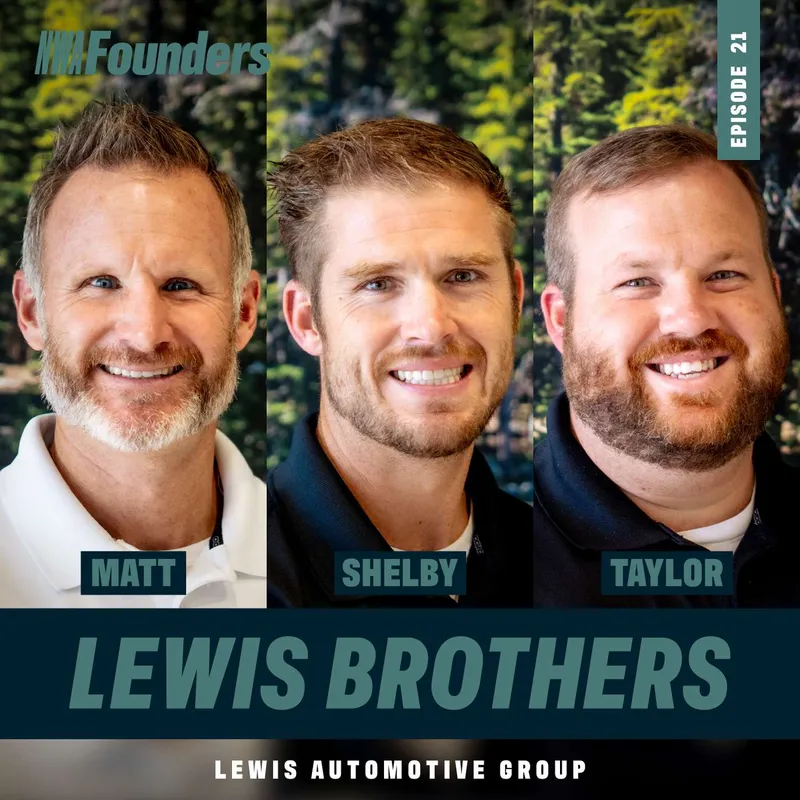
Matt, Shelby, & Taylor Lewis, Lewis Automotive Group
What does it take to run a multi-location car dealership while preserving a 75-year family legacy? In this episode, we sit down with Matt, Shelby…
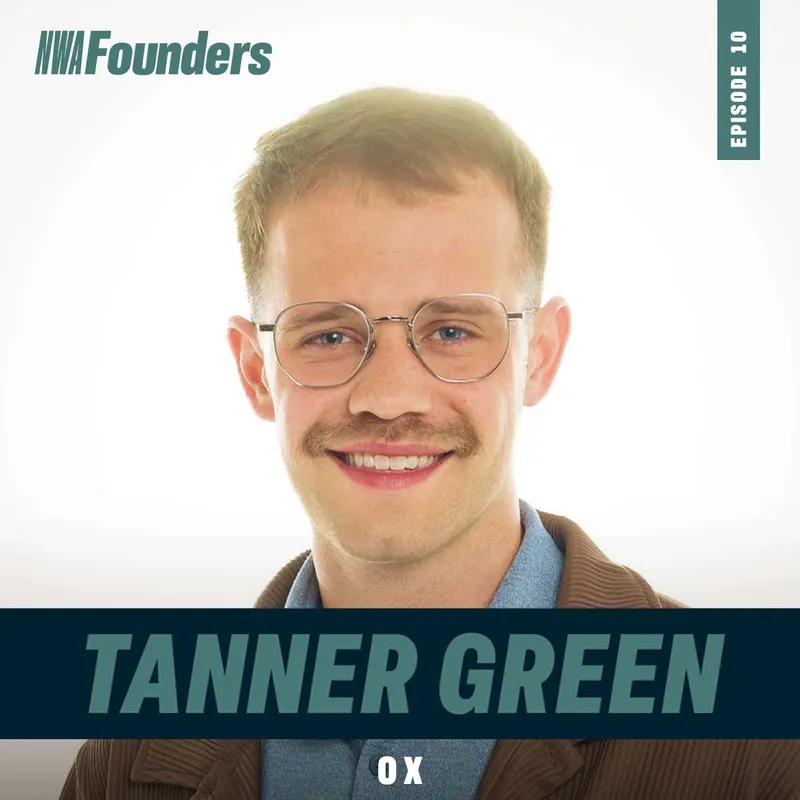
Tanner Green, Ox
What if you could run a warehouse remotely with AI-powered insights and real-time data? In this episode of NWA Founders, we sit down with Tanner…
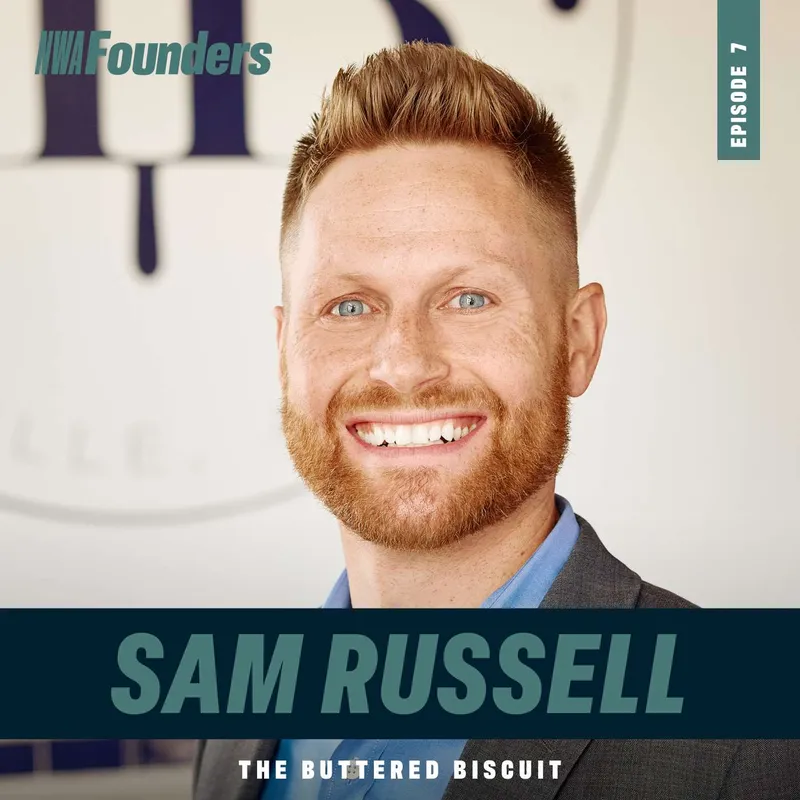
Sam Russell, The Buttered Biscuit
What does it take to build a beloved breakfast brand from the ground up? In this episode of NWA Founders, we sit down with Sam Russell, co-founder…
The NWA Founders letter
The biggest takeaways, every other Tuesday
The new episode and its biggest takeaways, the big moments worth jumping to, and a short roundup of Northwest Arkansas business. No issue has gone out yet, so if you sign up now, you’ll get the first one.